by Kayley Shanks
Have you ever anxiously anticipated the film adaptation of your favorite novel, only to be alarmingly disappointed when it came out? Do you refuse to watch the movie before the book? Adaptation has taken on a strange twist of artistic license and opinion among viewers, in a way that is very interesting.
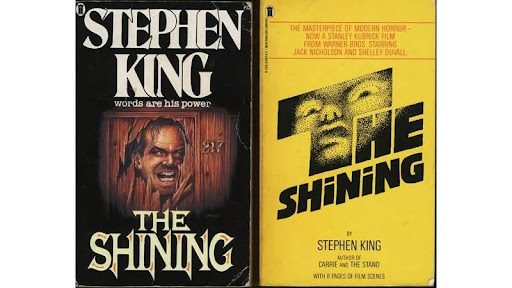
One of the most famous examples of a polarizing adaptation would be The Shining by Stephen King, made into a film by Stanley Kubrick in 1980. When the novel was first published in 1977, it was wildly popular, being King’s first best selling hardcover and cementing him as an important figure in horror. However, nowadays when people refer to The Shining, they are usually speaking of the movie alone, which has taken on a life of its own and become almost a separate work of art.
The differences between the novel and movie are stark and obvious to any reader/viewer. Jack’s alcoholism that is a recurring theme throughout the novel is sidelined in the movie. Wendy’s fiercer attitude and sense of agency throughout the novel is largely taken away; it only seems to appear at the end of the film. The very carefully defined characteristics of Danny and Jack’s relationship were mostly erased from the movie; we see them truly interact only a handful of times. The ending specifically changes from the hotel burning down to freezing over.
King famously critiqued the film, saying the sense of his novel was very warm and the movie was cold. He called it a “maddening, perverse, and disappointing film” and described it as a “great big, beautiful Cadillac with no motor inside.” King also spoke at length about the character of Jack being as close to autobiographical as he had ever been in his writing. He believed that writing this alcoholic abuser as someone who had the possibility for a redeemable ending gave him closure in some way, and Kubrick’s erasure of the alcoholism and added decisive ending disrupted the emotional calm that King had achieved from writing the novel.
So, we have two works of art that are connected yet slightly at odds. There can be no real measure of which one is better and there were certainly things lost between the page and screen, but it would be hard to be decisive on whether that damaged the integrity of the art. It also begs the question of whether an original author has final say over the story they created. Kubrick took King’s work and changed it in a way that damaged King’s original idea, but is that a violation or a reasonable artistic decision? Does it matter that King had personal ties to the work that were altered? Can we even view these works as separate? Is that unfair to the author?
As someone who has experienced and enjoyed both the film and novel, I take them as separate. I appreciate King’s writing and Kubrick’s visual storytelling, but I am sure that many people would take fault with that approach, especially King himself.
 Italics Mine
Leave a comment