Godzilla Returning to His Roots

By Alira Cohen

Monsters are important. You might laugh at this statement, but it’s true. I first realized this when I was eight years old watching the 1956 American cut of Ishiro Honda’s “Gojira,” a cautionary tale about nuclear war. In spite of the American cut’s obvious efforts to soften the blow of the message present in the original, eight-year-old me could still understand that there was something deeply disturbing about this monster movie. The images that director Terry O. Morse could not erase were those of children being scanned for radiation poisoning, cities devastated beyond repair, broken bodies lying in hospital beds. There was nothing that could have convinced me that this was a normal creature feature, and when I was told that it was a movie about Hiroshima and Nagasaki and told what that meant, everything started to make sense. The reason for Godzilla’s identity as a monstrous character was such: In the 1950s, Japan was under America’s watch in just about every sense due to the events of World War II. Honda wanted to talk about the bomb and the devastation caused by it, but in order to do so, he needed to be somewhat stealthy about it (though there were still a couple direct references to the bomb in the film). Therefore, instead of making a full-on war picture, he dressed it up in the skin of a monster movie, inadvertently creating the most influential monstrous character in film history. Unfortunately, the 1956 American cut, which neutered the 1954 original drastically by adding in an overbearing White main character that hadn’t been present in the film before, as well as amputating any even slight reference to the atomic bomb, did manage to leave a negative impact on Godzilla’s metaphor in the long run. It was aided by the almost immediate Japanese sequel to 1954, Motoyoshi Oda’s “Godzilla Raids Again,” which was by far an inferior film that centered around a monster fight rather than a message about nuclear war. Realizing that making Godzilla a more simple movie monster would bring in the big bucks nationally as well as overseas, filmmakers strayed away from the original metaphor in favor of monster battles and weightless destruction scenes. With the exception of a few gems (which still miss the mark in their own ways), this has been the pattern that the Godzilla franchise has unfortunately continued to go by for years. However, one very recent film seemed to break that pattern. 

“Godzilla: Minus One” by Takashi Yamazaki was marketed in both Japan and America as an official attempt at an authentic remake of Honda’s “Gojira.” What immediately stood out about the trailers was the apparent setting of 1940s Japan, as opposed to modern day or 1950s Japan. While “Gojira” got incredibly close to the subject of nuclear war, the film that Yamazaki promised would directly touch upon it. Trailers and TV spots for the film depicted destruction that was both deeply horrific and intimate, showing closeups of characters suffering and trying desperately to escape the rampaging beast. I made predictions about the film before seeing it upon its release in theaters; I believed that it would be the first Godzilla film to be truly brave about its subject matter, and show destruction in a way that would be as realistic as possible for a PG-13 movie. I’ve now watched the movie twice, both times in a theater, and I can safely say that my predictions and expectations were extremely close to the final product. I don’t want to go into spoilers so I will write about the subject as carefully as I possibly can to avoid doing so. What I can discuss, however, are themes. “Gojira” strikes me as the traumatized reaction of a man who had seen war and devastation so closely, but he couldn’t say everything that he wanted to say. It was Honda’s reaction to nuclear war but through a filter. “Minus One,” comparatively, strikes me as a reflection on the horrors that Japan faced…and not only this, but how the Japanese government handled the war.  The main character of “Minus One,” Shikishima, is a disgraced kamikaze pilot who fled his mission. Godzilla, as a result, represents his guilt, and seems to follow him throughout the film. Shikishima isn’t treated as a villain by the script. Instead, he is treated with compassion and extreme empathy. Ultimately, he needs to learn that self-sacrifice isn’t exactly the noble thing that the government would like him to believe that it is. The film discusses how the government of 1940s (and earlier) Japan had little regard for the young men that it sent off to war. I have to say, this was the part I wasn’t expecting. The original “Gojira” possessed elements of glorifying self-sacrifice, though admittedly it did fit the theme and made the film better, but “Minus One” feels like a bold answer to that. In terms of what I was expecting, “Minus One” is a more detailed version of “Gojira.” There are scenes that appeared in the original “Gojira” that are more intimately examined in “Minus One.” We see the characters’ suffering up close, which is exactly what I believe the franchise desperately needed. Even Godzilla himself is in pain, and it’s very clear. He lumbers in a way that is slow and unnatural. He moves as though he hasn’t been able to adjust to the changes that have happened to his body. Every time Godzilla was on screen I, a Godzilla fan of many, many years, felt intense anxiety and I wanted him to go away. This, in my opinion, is the biggest sign of a monster movie done right. After watching the movie for the first time, it made me want to go back and continue working on my own monster-focused book immediately.  

America seems to have had a massive reaction to “Godzilla: Minus One.” The movie remained in American theaters for far longer than it was intended to because of this. It received great praise throughout the country, and I’m seeing that this is causing Godzilla to be taken seriously again, at least to a certain degree. If anything, it is causing Americans to take monsters seriously again, which is very good news for someone like me. I have always had a fascination with writing monstrous characters, and writing them with purpose. It is a theme that I plan to stick to quite loyally as a writer, because I am of the opinion that many things can be done with monstrous characters. I feel as though “Godzilla: Minus One” proves this. Monsters are frightening, but they’re also frightened beings who don’t have much control over their own fates. Godzilla was the character that made me want to write about monsters in the first place, and now he is giving me that inspiration again as a twenty-two year-old. My favorite part of watching “Minus One” in a theater (the theater that I work at when I’m home, actually) was seeing my sister’s rather large reactions to many of the scenes. She has never been a big Godzilla fan, so this meant a lot to me, and reassured me that monsters can transcend the trappings of the horror, fantasy, and sci-fi genres to emotionally impact people who usually don’t care for such things. If done right, that is. And Yamazaki, in my opinion, did it perfectly. I truly do recommend that anyone reading this see “Minus One” at least once in their life, especially if you are a writer who is interested in writing monstrous characters or disaster pieces. Hopefully now, with the existence of this film, people will begin to realize that Godzilla is much more than a scaly MMA fighter, and monsters provide more than empty entertainment. I want to thank Yamazaki for rejuvenating my optimism about the future of monstrous characters, and I hope to be seeing some great projects come out as a result of this.  

Virginia and Vita: Star-Crossed Lovers in Literature


By Kay Mancino

Have you ever read a book by Virginia Woolf? Your professor may have handed you a copy of The Waves and asked you to write a five-page paper. Maybe you stumbled across Mrs. Dalloway in your hometown library and decided to pick it up. Perhaps you watched the film Orlando because you loved Tilda Swinton and realized it is based on a novel written nearly a century ago. No matter how you discovered Woolf’s writing, you can’t ignore the distinct imagery or subtle hints at underlying motifs: grief, loss, heartbreak, gender, and love.  

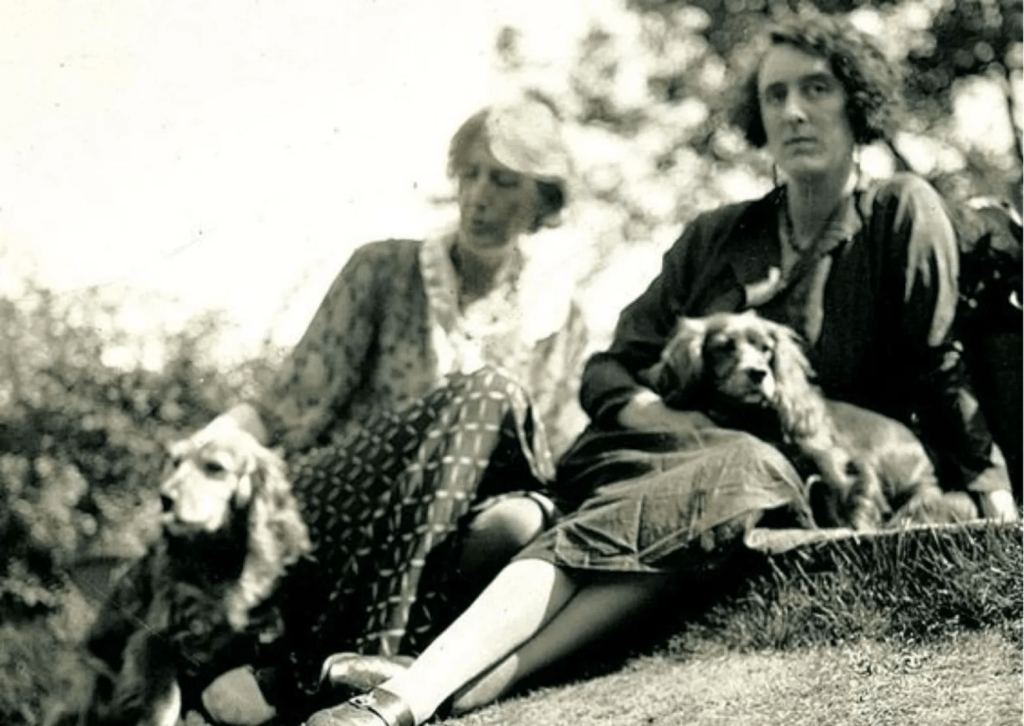
Born in 1892, Woolf explored the depths of feelings that were not often written about by female authors. For example, Orlando, published in 1928, featured a main character who switched genders from male to female. Woolf details the struggle that Orlando faced upon living as a newfound woman; unless she was married, she would lose her estate. The novel strikingly shows the power imbalance between men and women through prose which resonates with audiences of all ages and time periods. What most people don’t know is that Orlando is based on a real story and woman: Vita Sackville-West, Woolf’s long-time lover.  

Sackville-West, another novelist, lost her childhood estate in Kent due to her gender. Because she was a woman and the estate must be inherited by a man, she could not inherit the Knole house. Woolf wrote Orlando in order to provide Sackville-West an alternate ending, as Orlando ends up inheriting her own estate at the crux of the novel. Despite both Woolf and Sackville-West marrying men, their relationships were open. The two women met at a costume party in 1922 and remained lovers for over a decade, exchanging letters back and forth. Sackville-West’s son, Nigel Nicholson, addressed Orlando as the “longest” love letter of all time.  

Upon the publication of Orlando, Sackville-West wrote to Woolf, “The lesbians are rising throughout the States/ All because of you.” Woolf and Sackville-West’s letters were gathered and published within the collection, Love Letters, in 2021. Alison Bechdel, the author of Fun Home and creator of the “Bechdel Test,” wrote a forward for the collection. Despite the deaths of both women— Woolf from drowning and Sackville-West from cancer— their love has lasted throughout the century through the use of language and words. Woolf’s novels garnered inspiration for queer women, her icon becoming a staple for the community. The exploration of gender and identity throughout Orlando was a direct reference to Sackville-West and her challenge of societal roles.  

If you have ever read a novel by Virginia Woolf, you might not have expected to relate to her words and images so wholeheartedly. But at the end of the day, despite the passing of time, Woolf was a woman in love, with Vita, with literature, and with the mystery of what emotions can bring to life through the use of words.  


On Commonplace Poetry


By Cydni Thompson

“Full of beads and receipts and dolls and  

cloths, tobacco crumbs, vases and fringes.” 

Gwendolyn Brooks, “The Bean Eaters”


What defines the average life is a series of routines, mundanities, and commonplace objects. What life does not include a phone, a bed, a faucet, a blanket, a house; the filth that accumulates by the simple exertion of living, and then its cleaning? And while some may believe that poetry should eschew these most ordinary happenings, I, like many, argue that the commonplace aspects of our lives are significant, and fodder for poetry, whether the poem glamorizes these truths or lavishes in their plainness, it’s through the ordinary that the poem can transform. 

Gwendolyn Brooks produced a body of work focused on the sheer normality of Black life. In the poem “I love those little booths at Benvenuti’s,” Brooks assumes the perspective of a white group travelling to Bronzeville (a Black neighborhood) to observe Black people in a restaurant. They are expecting to see something animalistic; they are looking for a spectacle, an extraordinary sighting of those mythic Blacks in their famous ghetto. They are disappointed. Brooks ends the poem: 

The colored people arrive, sit firmly down,  

Eat their Express Spaghetti, their T-Bone steak,  

Handling their steel crockery with no clatter,  

Laugh punily, rise, go firmly out the door. 

Note the generic verbs: “arrive,” “sit,” “eat,” “laugh,” “rise,” “go,” and the specificity given to common food: “Express Spaghetti” and “T-Bone steak.” These words have no connotations, and are used to describe all groups of people. This explains in necessary detail the ordinariness of these Black people, which symbolizes their humanity. One function of using the commonplace in a poem is connection between humans on the basis of our shared banality; we sit, we eat, we leave. Strategically, Brooks uses these commonalities to shame the racist group whose spectatorship had dehumanized the Black patrons. 

Another poem which uses the ordinary to interrogate racism, specifically colonialism, is Lorna Goodison’s “Reporting Back to Queen Isabella”. This poem follows a colonizer reporting to his Queen the treasures he’s found in Jamaica: “high mountain ranges, expansive plains, deep valleys…” The vast extravagance of these natural wonders is juxtaposed at the end with the line: “and yes, your Majesty, there were some people.” In comparison to the beautiful landscape descriptions, this last line is unadorned and plain; the people are “some,” and unspecified. The ordinary language is used to expose the underlying sentiment carried by the colonizers–––that the land is gorgeous and valuable, and the people are of no consequence.  

The commonplace can also be used to embellish the lives of the working class. Philip Levine’s poem “An Ordinary Morning” begins, “A man is singing on the bus / coming in from Toledo.” Already the speaker is in an unadorned place, the bus, hearing something we’ve all heard before. Eventually, the passengers being to sing together, an unnamed song about love (“love that is true, of love / that endures a whole weekend,”) and hardship (“O heavy hangs the head,”). These abstract emotions occur to all humans, and so all the passengers can relate. This connection between people, this instance of singing, causes the speaker to look at his surroundings in a new light. By the end, they are not simply passengers, but “the living / newly arrived / in Detroit, city of dreams, / each on his own black throne.” They have been transformed into royalty; the seats are thrones, Detroit is full of dreams, and they’re only just arriving. Levine has not eliminated the normality of the bus in Detroit, but has chosen to frame it in a different light. The “ordinary morning” is made extraordinary through song.  

Rita Dove is another poet who sees possibility in the everyday. In “Dawn Revisited” Dove writes: 

Imagine you wake up 

with a second chance: The blue jay 

hawks his pretty wares 

and the oak still stands, spreading 

glorious shade. 

Here, the hawk of the blue jay and the shade of the oak tree constitute “a second chance,” though these are stimuli one experiences nearly every day without fail. Later, Dove ends the poem romanticizing a routine: “You’ll never know / who’s down there, frying those eggs, / if you don’t get up and see.” This poem situates the commonplace in the world of hope and wonder: how “glorious” the shade, how “pretty” the jay’s wares, how wonderful the mystery of the egg-frier. The implied notion is that these sensations are special because they belong to the living, a sentiment found a year earlier in Marie Howe’s famous poem “What the Living Do”. Addressed to the poet’s deceased brother, the poem opens: 

Johnny, the kitchen sink has been clogged for days, some utensil probably fell 

down there.  

And the Drano won’t work but smells dangerous, and the crusty dishes have piled 

up 

waiting for the plumber I still haven’t called. This is the everyday we spoke of. 

There is a gratitude in this poem as there is in “Dawn Revisited”, although it is for the everyday inconveniences rather than the birds and trees. The fact that the poem opens with a name of the dead means that all following details exist in contrast to death; in this case, they are a celebration of life, the clogged sink and crusty dishes alike.  

There is value in the universality of these, as there is in the poem “I’m Not Faking My Astonishment, Honest” by Paige Lewis, in which the speaker says: “A woman huffing up the trail behind / us says to her hiking partner, It wasn’t my size, / but it was only 9 dollars. And now all I want / is to see what it is.” There is an emotional weight to the ubiquitous overheard conversation, to the mutual recognition of a good deal, even between strangers. It is in moments like these that we see the poetic value in every second of our lives. The strategic use of specific verbs, embellishment and stripping down, the inclusion of the gross and the arbitrary; all these make for an authentic poem, a poem that exists in real life, on the ground, everywhere you look. 


Leave a comment