The Distance Between Brooklyn and Long Island

By Kayley Shanks 

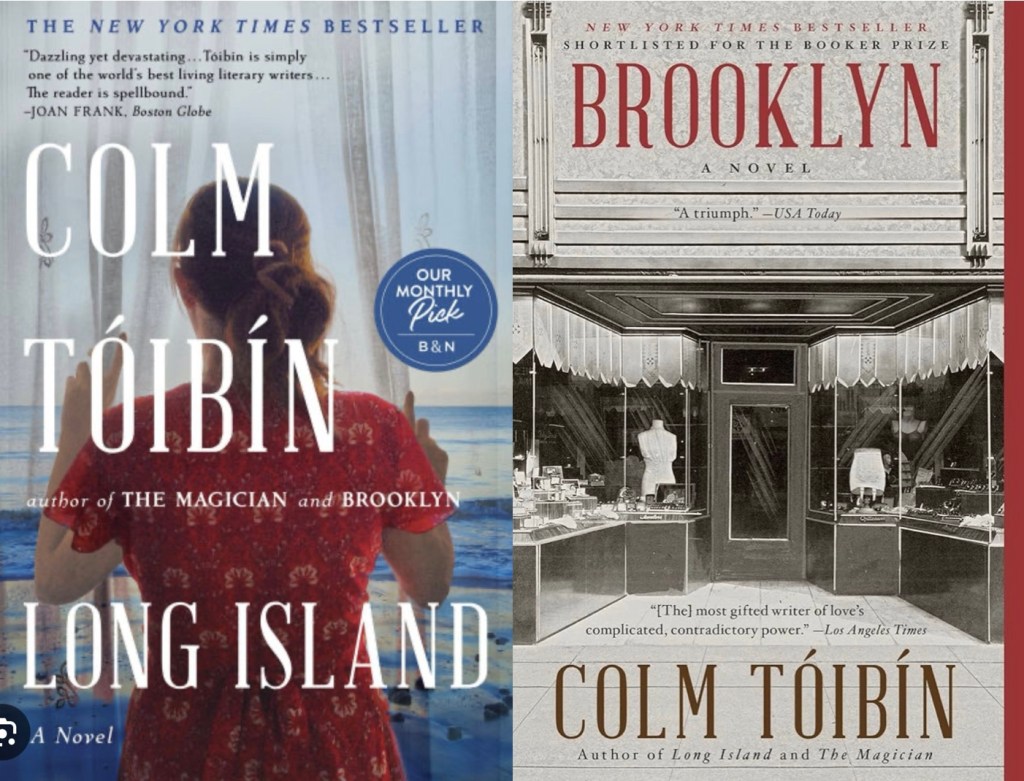
The world was first introduced to Eilis Lacey in Colm Toibin’s novel, Brooklyn. Eilis was a young woman living in Ireland during the 1950’s who, due to the lack of prospects for her future there, was urged to emigrate to Brooklyn. There she met Tony Fiorello, a young Italian native, and they fell in love. After finding home and comfort in a new place that had seemed so bleak and tragic, Eilis grew to love Brooklyn. That is, until the news of her sister’s passing came to her from across the sea. She returned home to Enniscorthy, sparked a new connection with a young man from home, and was unsure of what her future held. Ultimately, she decided to travel back to Brooklyn and to Tony, understanding that they were her new true home and that was the future she wanted. 

Fifteen years after that novel’s publication and twenty years after its events: enter Long Island, the sequel to Brooklyn. If you are a reader like me, and massively enjoyed Brooklyn, then I am sure we had a very similar reaction when reading this line on one of the opening pages of Long Island: 

“Indeed, he came back regularly when he knew that the woman of the house would be there and I would not. And his plumbing is so good that she is to have a baby in August.” 

How could so much have gone wrong? After meeting at a dance, going to the movies, a trip to Coney Island and much talk of raising children to be Dodgers fans (maybe the Brooklyn Dodgers no longer existing in the present could’ve contributed a bit to the negative turn), Eilis had wholly given up her life in Ireland to have a future with the man she loved and the place he had taught her to love. And then 20 years later all that disappears, and he cheats? 

The question remains: can we enjoy a novel whose events are categorically unenjoyable? Well, Toibin’s prose is always lovely. In both setting and character descriptions, his language is striking and seems to latch right on to you. He writes, “All of us have a landscape of the soul, places whose contours and resonances are etched into us and haunt us.” And when speaking of Eilis’ old connection from home, “It would be hard to explain to her how lonely he felt when he came into these rooms after closing time and how that feeling became more intense if he woke in the night or in the morning. He had not felt like this before the possibility of being with her arose.” 

The character Toibin has created in Eilis contains elements of all the women I know and love. He writes so convincingly and generously that there are parts of the story where the reader forgets the unfortunate opening and those trivial details looming over Eilis’ life, as she sometimes seems to as well, and we can be completely present with her. In each novel, Toibin’s descriptions of Ireland, both the land itself and the community held within, makes it feel to the reader as a second home, a place within an arm’s reach that we see and feel. 

I do not regret this novel. Its events make me angry and cautious towards the men in my life, but it is a beautiful piece of work regardless. When an author’s voice and creativity can shine through the most bitter stories, I consider them a lovely talent, and more than worthy of their place on my bookshelf.

The Shining: King’s or Kubrick’s?

by Kayley Shanks

         Have you ever anxiously anticipated the film adaptation of your favorite novel, only to be alarmingly disappointed when it came out? Do you refuse to watch the movie before the book? Adaptation has taken on a strange twist of artistic license and opinion among viewers, in a way that is very interesting. 

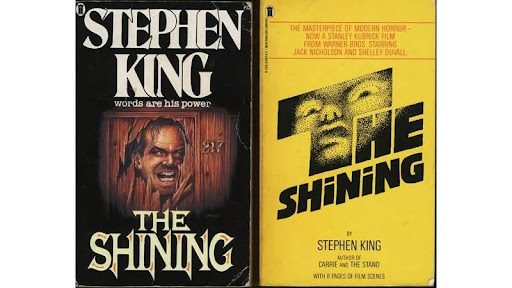
            One of the most famous examples of a polarizing adaptation would be The Shining by Stephen King, made into a film by Stanley Kubrick in 1980. When the novel was first published in 1977, it was wildly popular, being King’s first best selling hardcover and cementing him as an important figure in horror. However, nowadays when people refer to The Shining, they are usually speaking of the movie alone, which has taken on a life of its own and become almost a separate work of art. 

            The differences between the novel and movie are stark and obvious to any reader/viewer. Jack’s alcoholism that is a recurring theme throughout the novel is sidelined in the movie. Wendy’s fiercer attitude and sense of agency throughout the novel is largely taken away; it only seems to appear at the end of the film. The very carefully defined characteristics of Danny and Jack’s relationship were mostly erased from the movie; we see them truly interact only a handful of times. The ending specifically changes from the hotel burning down to freezing over. 

            King famously critiqued the film, saying the sense of his novel was very warm and the movie was cold. He called it a “maddening, perverse, and disappointing film” and described it as a “great big, beautiful Cadillac with no motor inside.” King also spoke at length about the character of Jack being as close to autobiographical as he had ever been in his writing. He believed that writing this alcoholic abuser as someone who had the possibility for a redeemable ending gave him closure in some way, and Kubrick’s erasure of the alcoholism and added decisive ending disrupted the emotional calm that King had achieved from writing the novel. 

So, we have two works of art that are connected yet slightly at odds. There can be no real measure of which one is better and there were certainly things lost between the page and screen, but it would be hard to be decisive on whether that damaged the integrity of the art. It also begs the question of whether an original author has final say over the story they created. Kubrick took King’s work and changed it in a way that damaged King’s original idea, but is that a violation or a reasonable artistic decision? Does it matter that King had personal ties to the work that were altered? Can we even view these works as separate? Is that unfair to the author?

As someone who has experienced and enjoyed both the film and novel, I take them as separate. I appreciate King’s writing and Kubrick’s visual storytelling, but I am sure that many people would take fault with that approach, especially King himself. 

Setting the Tone: How Music Enhances the Writing Process

By Nayeli Roldan

Music has an extraordinary power to evoke emotions, create atmospheres, and even influence our thoughts. For writers, harnessing this power can transform the writing process, helping to set the tone for their narratives and enhance the creative flow. Whether it’s the backdrop for a gripping scene or a catalyst for a character’s development, music can play a pivotal role in shaping the world of a story.

         When crafting a narrative, setting the right tone is essential. Music can serve as a guiding force in this endeavor. Different genres of music convey varying emotional landscapes; a sweeping orchestral piece can evoke grandeur and urgency, while a soft acoustic ballad may inspire introspection and vulnerability. By curating a playlist that reflects the mood of a scene, aesthetic of a character, or the overall theme of a story, writers can immerse themselves in the emotional undercurrents that drive their narratives. For instance, I’m currently working on a tense thriller scene for a short story and am struggling with how to move forward with it. I might opt for fast-paced, suspenseful tracks, creating a sense of urgency that mirrors the unfolding action, or I may focus specifically on one character and find a song that encapsulates their feelings. Conversely, when developing a romantic subplot, softer melodies can encourage a more reflective state, allowing the writer to explore deeper emotional connections between characters.

         Listening to music while writing can also stimulate creativity and enhance focus. Many writers find that background music helps drown out distractions, allowing them to dive deeper into their work. This practice can be particularly useful during moments of writer’s block. The right music can provide a spark of inspiration, helping to drive the plot forward and navigate through challenging sections of the narrative. Some authors prefer instrumental music, as lyrics can sometimes be distracting, while others—like myself—might opt for lyrics exclusively, as lyrics can sometimes serve as a guide in theme for a literary scene. Genres like classical, ambient, or electronic often create a sonic environment conducive to writing. These soundscapes can help writers enter a flow state, where creativity flows more freely and ideas coalesce seamlessly.

         Music is not only a tool used for inspiration; it can also aid in the practical aspects of writing scenes. By envisioning how a specific piece of music aligns with a particular moment, writers can enhance the vividness of their descriptions. For example, a climactic battle scene may benefit from the intensity of a cinematic score, guiding the pacing and tension of the writing. In contrast, a scene set in a serene garden may be enriched by soft, gentle melodies that mirror the tranquility of the setting. Additionally, music can aid in character development. The songs characters choose to listen to can reveal their personalities, motivations, and emotional states. A character who listens to upbeat pop may project confidence and positivity, while one drawn to dark, brooding music might hint at deeper struggles. These musical choices can deepen readers’ connections to characters and make their journeys more relatable. It could also just be a fun little project for writers to explore their world and better develop who their characters are, what the time period is, and what are the motives that drive their personality and decisions.

         Incorporating music into the writing process is a technique many authors use to unlock creativity and enhance storytelling. By setting the tone, fostering emotional depth, and aiding scene formulation, music can become an invaluable companion on the writer’s journey. Whether you’re drafting your next novel or polishing a short story, consider curating a playlist that resonates with your narrative. You may find that the rhythm of the music guides your pen as effectively as the rhythm of your words.

Queerness and Horror: An Interview with Rob Costello 

 by Cedar Warner

        Rob Costello (he/him) is a writer and teacher based in upstate New York. He writes for and about queer young people. His debut short story collection, The Dancing Bear: Queer Fables for the End Times, came out in 2024, shortly followed by We Mostly Come Out at Night: 15 Queer Tales of Monsters, Angels and Other Creatures, which Costello was the contributing editor for. His debut novel, An Ugly World for Beautiful Boys, is forthcoming in April 2025. 

         Costello’s work speaks to the complexity of queer young adulthood, and even more so to a queer young adulthood experienced under difficult circumstances. Whether these circumstances come from an individual or something larger these stories are important now more than ever, allowing the reader to glimpse even the smallest glimmers of hope through dark times. 

More information can be found at Rob Costello’s website https://www.cloudbusterpress.com

You have published a short story collection and an anthology, both focusing on queer teens facing the monstrous and the horrifying. Can you talk about the difference between these two processes, writing and collecting your own stories verses editing and curating other writers takes on this theme?

         This is a great question because the process was very different for each book. With my short story collection, The Dancing Bears: Queer Fables for the End Times, it was pretty straightforward. The book is essentially a collection of pieces I wrote over the past decade or so. Many of them were previously published in various literary journals and genre magazines, but they all share certain key themes and ideas related to queerness, desire, and loneliness that recur throughout my work—all through the lens of queer horror and dark fantasy, which is what I enjoy writing the most. When the opportunity came along to publish a collection, it was mostly a matter of picking and choosing among these stories for those that I thought would work best together. 

         With my anthology, We Mostly Come Out at Night: 15 Queer Tales of Monsters, Angels and Other Creatures, I started with the concept first. The book explores the connection between queerness and the monstrous, with stories that feature monsters as positive and empowering metaphors for the otherness of being queer. As editor, my first job was to create a pitch that would entice a publisher to acquire the book. My second job was to invite other writers to be a part of the project. Once the pitch was sold and everyone was signed on, I worked with the contributors to identify their monsters and to flesh out the concepts behind their stories to ensure they stayed within the parameters of the anthology. Then they got to work. Next, my acquiring editor at Running Press Teens, Britny Perilli, and I partnered with each writer on revisions, with the ultimate result being the finished book that was published this May. 

         Overall, the anthology was a much more collaborative process. It was tremendously gratifying working with other writers and seeing how each interpreted the theme of the anthology. Some of their stories are creepy, some are romantic, some are contemplative, some are funny. (I wanted to challenge myself to write something outside my comfort zone, so my own contribution to the book is probably the lightest, funniest story I’ve ever written.) The concept of the monster means many things to different people, and it was great fun to see what the contributors came up with! 

Your novel will be a divergence from the connecting genre of horror shared by your first two books, but can you talk about any overlap that there is? How has thinking about the horror genre and how it relates to queerness in literature influenced the way you wrote your novel? 

         I think for me, the link between my previous books and my forthcoming YA novel, An Ugly World for Beautiful Boys, has to do with the connection between queerness and trauma. Horror for me is typically centered in the experience of trauma (through a queer lens). Virtually every piece in my short story collection involves characters grappling with the nightmare of existing in a world that rejects and marginalizes kids who are different. 

         In contrast, my anthology is a kind or reaction against the queer trauma narratives that I typically write. As I said, I wanted that book to be empowering for young queer readers, and so even though there are stories about characters coping with some pretty heavy stuff, they always overcome it in positive and inspiring ways. 

         In my novel, these themes and goals merge. The book is a contemporary realistic story set in a fictional MAGA-pilled small town in the summer of 2016. (Okay, maybe that makes it historical fiction… sigh.) It’s about a seventeen-year-old named Toby Ryerson who, in a fit of anger, outs a boy named Dylan that he’s been secretly hooking up with. This one mistake sets off a chain reaction of disasters that quickly spiral out of Toby’s control, setting him on a collision course with the overbearing older brother who raised him. 

         I describe the book as a gritty and harrowing queer coming-of-age novel as well as a love story between two mismatched brothers coping with the burden of secrets and a legacy of shame. But at its core it’s really about one boy’s struggle to overcome the overlapping traumas of his life. Toby’s experience of the horrific overdose of his mother when he was a little boy, combined with the lifelong trauma of growing up under the shadow of homophobia, sets him on a path of self-destruction that begins when he outs Dylan and ends in a nightmare scenario in a seedy Manhattan nightclub. Toby’s journey is very much rooted in the real-life horrors that too many queer kids face, but he ultimately survives them thanks to the abiding love of his brother. Thus, I hope readers will find the book to be both dark and hopeful, horrific and uplifting. 

When your novel comes out in 2025 you will have had three different types of debuts in a period of just a couple years. What have those different experiences been like? 

         As I think any writer will tell you, the experience of each new book is unique. 

         The publication of my short story collection was a much quieter affair than my anthology, largely because debut short story collections from new/unknown writers like me typically don’t generate a ton interest. I did a couple of events (online and in person) which were a lot of fun, and I participated in a wonderful group reading that my publisher organized at Readercon this past July. 

         With my anthology, there’s been a lot more publicity, in large part because I have a dedicated and talented publicist at Running Press Teens who has put in a ton of work to get the word out. I’ve done a bunch of print and podcast interviews, participated in several readings/events, and have generally seen more buzz for the book, which has felt tremendously gratifying. 

         We’ll see what happens with my novel. It doesn’t come out until April of 2025, but my publisher is already lining up events for me to do, so I am hopeful. In general, novels are easier to promote than short story collections or anthologies, so I expect it will be a vastly different experience from what I’ve seen so far. I’m excited!