Before R’lyeh: Proto-Cosmic Horror

By Gabriel Berger

One of the problems with humans, especially in regards to climate change, is that we believe that we are the main characters of this planet, and that we have the plot armor to survive it. This is something humans have always thought and is something that the genre of cosmic horror has been trying to disprove. We may think of this type of nihilism as new, but, in terms of modern society, it’s surprisingly old.

Cosmic horror is a genre of horror popularized and made into the form we know today by H.P. Lovecraft. It deals with the idea of an indifferent universe, that we are not the center of the universe, just a cosmic blip, and there are things beyond our understanding that will drive us mad out there. Lovecraft’s cosmic horror is the form of cosmic horror that is popular today. However, it did not start with him. Prior to him, several other authors wrote in a vein of cosmic horror that holds many of the same themes but execute them in a way that is more nature based, in what I’m calling “Proto-Cosmic Horror.”

Algernon Blackwood (1869-1951) was an English man who loved the outdoors, and it shows. The two stories of his that are most known are “The Willows” and “The Wendigo.” “The Willows” is particularly influential and follows a duo of canoe travelers along the Danube who encounter spring rapids and are stuck upon an island, where the trees themselves seem to hold a power to them. Without trying to spoil too much, the discussion of ancient spirits beyond our comprehension is probably the greatest contributor to cosmic horror. Blackwood captured an amazing atmosphere with these stories, of a wilderness that is both hostile and uncaring, much too big for human comfort.

William Hope Hodgson (1877-1918) was also an Englishman whose early career as a sailor led to his writing of many a sea tale, in the vein of Weird Fiction. His short but prolific career (only 11 years long) had him release major works of weird fiction, including the four novels The Boats of the Glen Carrig, The Ghost Pirates, The Night Land, and The House on the Borderland.

The former two are sea stories with many horror elements brought into them, an influence shown in cosmic horror’s obsession with the sea.  The latter two are weird science fiction. The Night Land follows a future vision of Earth where the sun has gone out and the last humans live in a massive pyramid, as they are stalked by vast shapes outside the pyramid. The House on the Borderland follows a man living in a house where many strange occurrences are documented. He is besieged by pigmen, and lays witness to the cosmos and the vistas beyond the stars. This is where I note much of the actual cosmic influence in later cosmic horror to come from.

Robert W. Chambers (1865-1933), the only American on this list, is best known for his 1895 collection The King in Yellow which concerns a play called “The King in Yellow”, which has influence from an entity called The King in Yellow, and his mark, the Yellow Sign. The reading of the play is said to drive people mad, and this is shown off the bat in the first story “The Repairer of Reputations”. The King in Yellow play has another world with strange baroque elements to it, and that vibe influenced many a weird fiction writer, while the actual entity and the discussion of an entity’s sign influenced many cosmic horror writers. In fact, The King in Yellow is so beloved that many other writers have expanded upon the lore.

Arthur Machen (1863-1947) incorporated very blatantly pagan elements to his stories, the biggest two being The Great God Pan and “The White People”. The former, wrapped up in quite a classist and misogynistic air, follows two men who are having revenge taken upon them by the child of a woman who they experimented on, whose father is Pan. The Great God Pan’s influence is much like Blackwood’s, a god beyond our comprehension and the horror that that brings.

At the time that these authors were writing, humanity did not know much about the cosmos. It makes sense that much of the early cosmic horror was more in the vein of the romantics that came before, bringing in horror of the natural world.  It’s a way of evoking a similar emotion without needing to know the vast emptiness between stars.

Exorcism Through Writing

By Ethan Luce 

Content Warning for Suicide

Many writers have an emotion they wish to exorcize. And many feel suffering can only improve art. But is that true? Vincent van Gogh was a tormented man, but one of the greatest artists of our time. The Bell Jar was an instant best seller, inspired by the author Sylvia Plath’s experiences with trauma and depression. Does art require suffering for success? For a long time I thought so.  

Many authors have thought of using their work as an exorcism of trauma or as a means of catharsis. But can it truly help? Memoirist Vicki Laveau-Harris noted that penning her Stella Prize-winning book The Erratics was not a cathartic experience, though she added that this is not the case for all authors. “For every memoirist who thinks as I do, there are many who feel the opposite: that writing a memoir should, and does, provide catharsis,” Harris said.1 

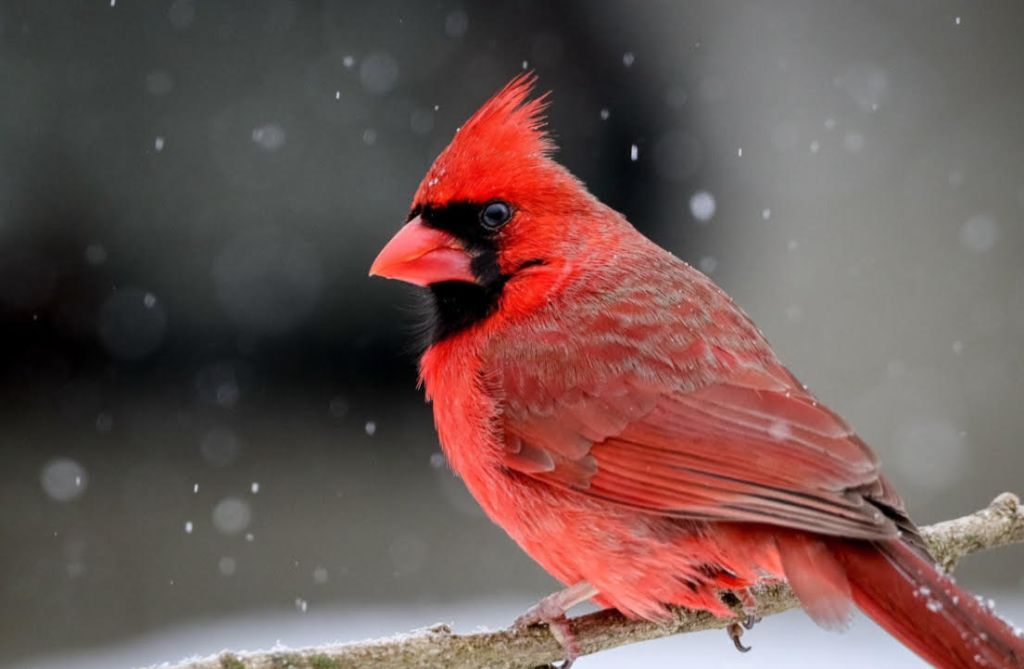
My grandfather once told me that cardinals carry the souls of the departed who come back to watch over you. I’ve thought about that a lot. I’ve thought of death, wondering if I’ll fly free like a bird. Would those shores be kinder, my family happier with my soul adrift? Many days, I’ve thought that when I meet the reaper, I’ll nuzzle my face against his billowing warmth, coming in waves like that of hot ocean water. I’ll forget my worries, and let loose my burdens. And then I’ll take flight.  

But is finding catharsis through writing fiction different? Delilah S. Dawson, in her essay “Revenge and Capitalism in Popular Media,” noted that writing revenge fantasies through fiction can indeed give the writer catharsis. As Dawson notes, often in life wrongdoers get away with all sorts of things, so doling out punishments in fiction can provide satisfaction.2 Fiction can be fair, but life never is. But what of the author’s own hurt? 

My grandfather grew up in a coal mining town in Appalachia. Kentucky, specifically. He was a warm man, always smiling. But he told me and my father before me never to become a coal miner, because that was one of the worst jobs of all. Where he grew up, the Great Depression never ended, and he carried that with him. He was a jokester and had the loudest laugh I’d ever heard. But he was always worried about money. He kept his Volvo for twenty years even when it spouted fumes. Whenever we went to McDonalds, he’d take as much ketchup packets as he could and shove them in his pockets. 

Jarred McGinnis noted that writing The Coward, a book based on his abusive childhood, was an incredibly cathartic experience. “People pay a lot of money for therapy, and I figured out how to get paid for mine,” McGinnis said. “Aren’t I a cleverclogs?”3  Horror author Zin E. Rocklyn noted that while they find the act of writing cathartic, they still make sure to give themselves aftercare once they’ve finished particularly draining and personal works. “Now, I focus on aftercare. […] Very basic things, which I still haven’t mastered, but I’m working on it,” Rocklyn said. “I battle several types of depression and PTSD, as well as general anxiety, so I have to make sure I take my meds and be aware of when I feel like I’m starting to spiral.”4 

I’ve quoted so many, but what can I say on writing as an act of catharsis? I have written many pieces myself, and I know of the myth of the suffering artist, that only our pain can create great art. I have felt deep pain. I have been hurt by others. I have felt isolated and alone and afraid. I am autistic, and in my youth I suffered from a skin condition that meant I could not sweat, and looked years older than I was. At twelve, I could be mistaken for eighty. That was not ideal in a society where you have to look perfect, and where people can be cruel when you can’t keep up. I was not alone; I had family who loved and supported me, and I found friends who did the same. I feel blessed to have them, but I still felt ashamed of myself, and turned hate inwards. I remain vague on this simply because there are things I do not wish to share, but I kept all of that inside because I felt it my duty, in some strange way. And perhaps it would help my art. Perhaps I would become a better writer through it. 

One member of my support network was my grandfather. I loved him deeply, and he me. After some years, however, he developed hydrocephalus. He struggled but he kept smiling. One day during mid-pandemic 2020, he committed suicide. There had been no warning signs. For several days, we could not even find a note. My entire family was wracked with grief, but after the initial period, I kept moving forward. Years later, when I took a creative writing class at Purchase College, I wrote a story inspired by this incident. My professor noted that the main character had obviously not processed his grief. And I hadn’t either, I realized. I had hoped to use pen and paper to ward grief off, but what I had to do was admit to it. I wept and cried, and finally leaned on my family. I told them what I felt, and I let that weight leave me. 

I wrote the pain into my stories as an exorcism when I felt I had no one else to talk to. And did it help? Of course not. I still felt the same way. No, what helped me was to reach out to my support network and try to work on my own mental health. Even now, I still struggle to stay above water. But suffering does not ennoble. It just exists, without purpose or significance. It doesn’t help make anyone special or better. It’s just suffering. 

Yet that shouldn’t mean you don’t have a right to be happy. The suffering artist is a popular myth, but it’s still a myth. My pain did not give the art I made a quality I could not have given it had I focused on trying to heal. Can your experiences help you write? Yes. But ultimately, it’s no substitute for therapy, or for turning to the people who support and care about you. No one does anything alone in this world. And you are not alone. Even knowing this, I sometimes still feel alone. When I feel that way, I look outside to see all that miraculous world. Sometimes when I do it, I see a cardinal.