What the Renaissance Faire Can Teach About Writing

By Isabel Taylor

Until this fall, I last attended the Tuxedo Renaissance Faire six years ago. My memory of that day is hazy: a sea of lace-up corsets, handheld fans, and contortionists. This October, my friend invited me to go on closing weekend with our local children’s librarian and the librarian’s friend. This day refreshed my view of fiction. I am currently working on my senior project, which revolves around a similar fantasy environment to the Renaissance Faire. My friend wore a brown and white milkmaid dress, the librarian wore a Robin Hood costume, and the librarian’s friend wore a moss-skirted fairy costume. I had dressed up too, in a blue velvet dress and a DIY French hood. 

When we arrived, the Queen (inspired by Elizabeth I) and her posse walked by, smiling and waving at us. The Queen’s hoop skirt made it look like she was floating. My friend told me that when she wore her own Robin Hood costume a couple years ago, the Queen saw her and said, “Keep an eye on him”! Similarly, after my friend and I watched a maypole “peasant pageant”, the winner walked up to us and said, “I won, didn’t I?” These spontaneous interactions made it seem like we were interacting with characters instead of regular people.

Another immersive element was the park itself. There were designated areas for each activity, similar to a map in a fantasy novel. The knights jousted on the Roselawn Tournament Field, the fairies hid in the Enchanted Forest, and the peasants danced at the aforementioned maypole. There was also Lady Abigail’s Dungeon Museum, which had an array of medieval torture devices, including the iron maiden, the rat torture, and the tongue tearer. This museum was atmospherically different from the rest of the faire; I was removed from danger, so this lessened the immersion compared to places like the Enchanted Forest, where there was no danger to speak of. 

With these different places, the conventions of the modern world were gone. The thoughtfulness of this fair could be translated into the process of writing a book. The fair was like a finished draft with its new iconography: small ponds to boat across, vendors selling weaponry and handmade clothing, and performances to watch. This taught me to have every element in place when writing a new world, including the worldbuilding intricacies, the societal codes, the available entertainment, and the story’s extent of danger.

The last place I went to was the Sunset Ball in an outdoor space called the “Chess Board”. As we danced, the Queen and her noble family sang about the final weekend of the Renaissance Faire. The rest of the actors sang too, including the fairies, who spoke in sign language. This small detail helped me reimagine how people distinguish themselves in a fantasy-historical setting. When I left the park at closing time, the actors were lined up at the side of the path with banners saying things like “Ahhh!” and “Hark!” This reminded me of Lady Abigail’s Dungeon Museum in that I was removed from any urgency that the banners conveyed. The actors being stationed at the exit was like the end of a novel; even after the reader leaves, the characters still exist.

Writing and Reading Are Not Solitary Pursuits

By Remi Bryan

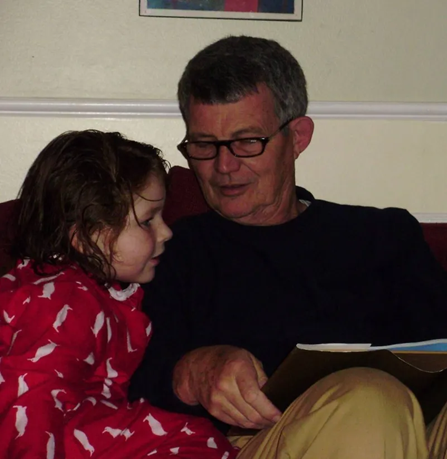
A stereotypical depiction of a writer or avid reader usually consists of someone introverted, a loner, a wallflower, who finds comfort and escape in writing and/or reading. While that is true for a lot of writers and readers, it was not that way for me. When I was a child, I hated reading. It frustrated me, it made my head hurt, I would have much rather been playing with my friends or watching TV with my brother—until my grandfather and I started an unofficial tradition of reading together in the morning.

We were both the only morning people in the family; he woke up at 4 A.M., I woke up at 5 A.M. So instead of having to deal with a tiny six-year-old blindly following him around, my grandfather invented a routine. He would hold me up so I could fill the birdfeeders, we would make sugar water for the hummingbirds, pick up the mail, and finally grab the newspaper. Then we’d cuddle up on the couch closest to the windows and read the Sunday comics under the morning sun.

He taught me about grammar, structure, pronunciation, and phonics through Peanuts and Zits. Quickly, reading became less of a chore and more of a way for me to feel close to my grandfather. Once I got older and began writing he always wanted to read my pieces, even if it was just an essay about how I read Lord of The Flies. My grandfather would show the pieces to my aunts and uncles, and writing became yet another way for me to connect to the older generation of family members, my own little community.

We never stopped reading the newspaper together. He would send me clippings of articles he thought I would like, I would send him letters back about my thoughts on them. I still have the clippings saved in a yellow envelope in my room. My grandfather was the first writing/reading friend I had in life. The final gift I gave my grandfather before he passed was a poem thanking him for how he influenced me and my love for writing.

He gave me the tools to create my own community in the world, one of likeminded people who love reading and writing just as much as I do. When I was in high school, I made my own writing community through fanfiction, writing/sharing melodramatic poems, and figuring out how to edit essays. Nevertheless, being from a small southern town, I still felt isolated.

However, once I arrived at college, I realized I didn’t have to carve out my own community. A community already existed amongst the writers: the community behind the literary magazine Italics Mine. I saw creatives of varying mediums melding to create one beautiful amalgamation of pure art. It was when I picked up my first copy that I realized writing and reading have never been solitary activities. The stereotypical writer polishing their manuscript alone in their room was never the full story, there’s a community, an ecosystem.

Literary magazines are an amazing example of the ecosystem behind a writing community. Writers need editors, editors need readers, readers need writers, so on and so forth. Within that cycle comradery, empathy, and creativity blossom. Even if it seems so small, making an effort to relate with others about reading and writing can be so important. I would never have joined Italics Mine if I didn’t love editing. I would never have found my love for editing if I wasn’t a writer. I would never have found my love for writing if I didn’t love reading. Finally, I would never love reading if I didn’t have my grandfather teach me how to enjoy reading under the early morning sun, showing me reading does not have to be a chore and most importantly does not have to be done alone.