Exorcism Through Writing

By Ethan Luce 

Content Warning for Suicide

Many writers have an emotion they wish to exorcize. And many feel suffering can only improve art. But is that true? Vincent van Gogh was a tormented man, but one of the greatest artists of our time. The Bell Jar was an instant best seller, inspired by the author Sylvia Plath’s experiences with trauma and depression. Does art require suffering for success? For a long time I thought so.  

Many authors have thought of using their work as an exorcism of trauma or as a means of catharsis. But can it truly help? Memoirist Vicki Laveau-Harris noted that penning her Stella Prize-winning book The Erratics was not a cathartic experience, though she added that this is not the case for all authors. “For every memoirist who thinks as I do, there are many who feel the opposite: that writing a memoir should, and does, provide catharsis,” Harris said.1 

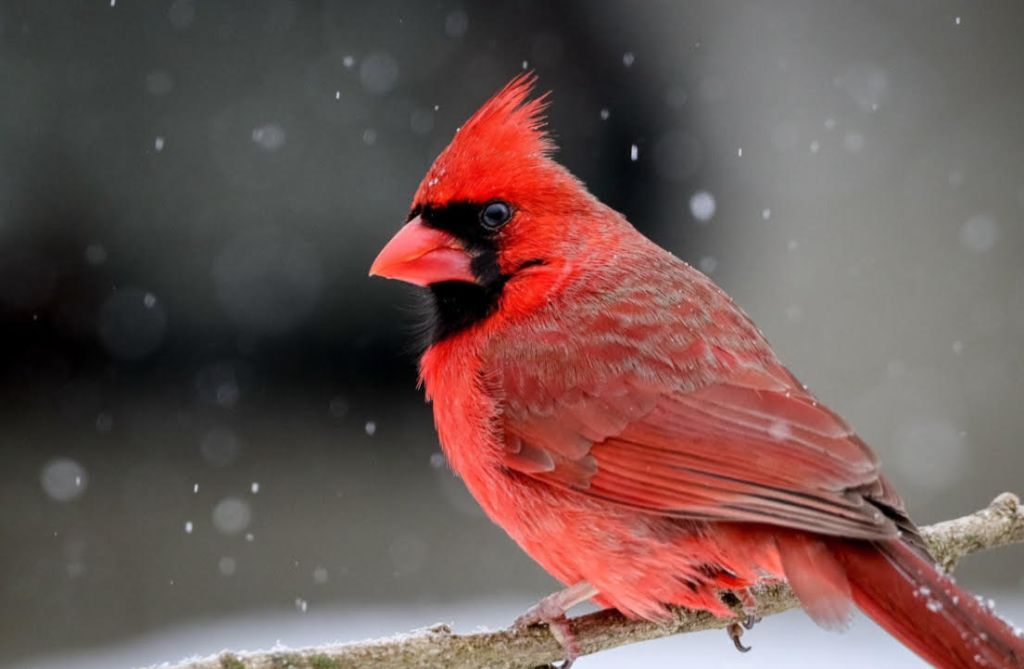
My grandfather once told me that cardinals carry the souls of the departed who come back to watch over you. I’ve thought about that a lot. I’ve thought of death, wondering if I’ll fly free like a bird. Would those shores be kinder, my family happier with my soul adrift? Many days, I’ve thought that when I meet the reaper, I’ll nuzzle my face against his billowing warmth, coming in waves like that of hot ocean water. I’ll forget my worries, and let loose my burdens. And then I’ll take flight.  

But is finding catharsis through writing fiction different? Delilah S. Dawson, in her essay “Revenge and Capitalism in Popular Media,” noted that writing revenge fantasies through fiction can indeed give the writer catharsis. As Dawson notes, often in life wrongdoers get away with all sorts of things, so doling out punishments in fiction can provide satisfaction.2 Fiction can be fair, but life never is. But what of the author’s own hurt? 

My grandfather grew up in a coal mining town in Appalachia. Kentucky, specifically. He was a warm man, always smiling. But he told me and my father before me never to become a coal miner, because that was one of the worst jobs of all. Where he grew up, the Great Depression never ended, and he carried that with him. He was a jokester and had the loudest laugh I’d ever heard. But he was always worried about money. He kept his Volvo for twenty years even when it spouted fumes. Whenever we went to McDonalds, he’d take as much ketchup packets as he could and shove them in his pockets. 

Jarred McGinnis noted that writing The Coward, a book based on his abusive childhood, was an incredibly cathartic experience. “People pay a lot of money for therapy, and I figured out how to get paid for mine,” McGinnis said. “Aren’t I a cleverclogs?”3  Horror author Zin E. Rocklyn noted that while they find the act of writing cathartic, they still make sure to give themselves aftercare once they’ve finished particularly draining and personal works. “Now, I focus on aftercare. […] Very basic things, which I still haven’t mastered, but I’m working on it,” Rocklyn said. “I battle several types of depression and PTSD, as well as general anxiety, so I have to make sure I take my meds and be aware of when I feel like I’m starting to spiral.”4 

I’ve quoted so many, but what can I say on writing as an act of catharsis? I have written many pieces myself, and I know of the myth of the suffering artist, that only our pain can create great art. I have felt deep pain. I have been hurt by others. I have felt isolated and alone and afraid. I am autistic, and in my youth I suffered from a skin condition that meant I could not sweat, and looked years older than I was. At twelve, I could be mistaken for eighty. That was not ideal in a society where you have to look perfect, and where people can be cruel when you can’t keep up. I was not alone; I had family who loved and supported me, and I found friends who did the same. I feel blessed to have them, but I still felt ashamed of myself, and turned hate inwards. I remain vague on this simply because there are things I do not wish to share, but I kept all of that inside because I felt it my duty, in some strange way. And perhaps it would help my art. Perhaps I would become a better writer through it. 

One member of my support network was my grandfather. I loved him deeply, and he me. After some years, however, he developed hydrocephalus. He struggled but he kept smiling. One day during mid-pandemic 2020, he committed suicide. There had been no warning signs. For several days, we could not even find a note. My entire family was wracked with grief, but after the initial period, I kept moving forward. Years later, when I took a creative writing class at Purchase College, I wrote a story inspired by this incident. My professor noted that the main character had obviously not processed his grief. And I hadn’t either, I realized. I had hoped to use pen and paper to ward grief off, but what I had to do was admit to it. I wept and cried, and finally leaned on my family. I told them what I felt, and I let that weight leave me. 

I wrote the pain into my stories as an exorcism when I felt I had no one else to talk to. And did it help? Of course not. I still felt the same way. No, what helped me was to reach out to my support network and try to work on my own mental health. Even now, I still struggle to stay above water. But suffering does not ennoble. It just exists, without purpose or significance. It doesn’t help make anyone special or better. It’s just suffering. 

Yet that shouldn’t mean you don’t have a right to be happy. The suffering artist is a popular myth, but it’s still a myth. My pain did not give the art I made a quality I could not have given it had I focused on trying to heal. Can your experiences help you write? Yes. But ultimately, it’s no substitute for therapy, or for turning to the people who support and care about you. No one does anything alone in this world. And you are not alone. Even knowing this, I sometimes still feel alone. When I feel that way, I look outside to see all that miraculous world. Sometimes when I do it, I see a cardinal.

Queerness and Horror: An Interview with Rob Costello 

 by Cedar Warner

        Rob Costello (he/him) is a writer and teacher based in upstate New York. He writes for and about queer young people. His debut short story collection, The Dancing Bear: Queer Fables for the End Times, came out in 2024, shortly followed by We Mostly Come Out at Night: 15 Queer Tales of Monsters, Angels and Other Creatures, which Costello was the contributing editor for. His debut novel, An Ugly World for Beautiful Boys, is forthcoming in April 2025. 

         Costello’s work speaks to the complexity of queer young adulthood, and even more so to a queer young adulthood experienced under difficult circumstances. Whether these circumstances come from an individual or something larger these stories are important now more than ever, allowing the reader to glimpse even the smallest glimmers of hope through dark times. 

More information can be found at Rob Costello’s website https://www.cloudbusterpress.com

You have published a short story collection and an anthology, both focusing on queer teens facing the monstrous and the horrifying. Can you talk about the difference between these two processes, writing and collecting your own stories verses editing and curating other writers takes on this theme?

         This is a great question because the process was very different for each book. With my short story collection, The Dancing Bears: Queer Fables for the End Times, it was pretty straightforward. The book is essentially a collection of pieces I wrote over the past decade or so. Many of them were previously published in various literary journals and genre magazines, but they all share certain key themes and ideas related to queerness, desire, and loneliness that recur throughout my work—all through the lens of queer horror and dark fantasy, which is what I enjoy writing the most. When the opportunity came along to publish a collection, it was mostly a matter of picking and choosing among these stories for those that I thought would work best together. 

         With my anthology, We Mostly Come Out at Night: 15 Queer Tales of Monsters, Angels and Other Creatures, I started with the concept first. The book explores the connection between queerness and the monstrous, with stories that feature monsters as positive and empowering metaphors for the otherness of being queer. As editor, my first job was to create a pitch that would entice a publisher to acquire the book. My second job was to invite other writers to be a part of the project. Once the pitch was sold and everyone was signed on, I worked with the contributors to identify their monsters and to flesh out the concepts behind their stories to ensure they stayed within the parameters of the anthology. Then they got to work. Next, my acquiring editor at Running Press Teens, Britny Perilli, and I partnered with each writer on revisions, with the ultimate result being the finished book that was published this May. 

         Overall, the anthology was a much more collaborative process. It was tremendously gratifying working with other writers and seeing how each interpreted the theme of the anthology. Some of their stories are creepy, some are romantic, some are contemplative, some are funny. (I wanted to challenge myself to write something outside my comfort zone, so my own contribution to the book is probably the lightest, funniest story I’ve ever written.) The concept of the monster means many things to different people, and it was great fun to see what the contributors came up with! 

Your novel will be a divergence from the connecting genre of horror shared by your first two books, but can you talk about any overlap that there is? How has thinking about the horror genre and how it relates to queerness in literature influenced the way you wrote your novel? 

         I think for me, the link between my previous books and my forthcoming YA novel, An Ugly World for Beautiful Boys, has to do with the connection between queerness and trauma. Horror for me is typically centered in the experience of trauma (through a queer lens). Virtually every piece in my short story collection involves characters grappling with the nightmare of existing in a world that rejects and marginalizes kids who are different. 

         In contrast, my anthology is a kind or reaction against the queer trauma narratives that I typically write. As I said, I wanted that book to be empowering for young queer readers, and so even though there are stories about characters coping with some pretty heavy stuff, they always overcome it in positive and inspiring ways. 

         In my novel, these themes and goals merge. The book is a contemporary realistic story set in a fictional MAGA-pilled small town in the summer of 2016. (Okay, maybe that makes it historical fiction… sigh.) It’s about a seventeen-year-old named Toby Ryerson who, in a fit of anger, outs a boy named Dylan that he’s been secretly hooking up with. This one mistake sets off a chain reaction of disasters that quickly spiral out of Toby’s control, setting him on a collision course with the overbearing older brother who raised him. 

         I describe the book as a gritty and harrowing queer coming-of-age novel as well as a love story between two mismatched brothers coping with the burden of secrets and a legacy of shame. But at its core it’s really about one boy’s struggle to overcome the overlapping traumas of his life. Toby’s experience of the horrific overdose of his mother when he was a little boy, combined with the lifelong trauma of growing up under the shadow of homophobia, sets him on a path of self-destruction that begins when he outs Dylan and ends in a nightmare scenario in a seedy Manhattan nightclub. Toby’s journey is very much rooted in the real-life horrors that too many queer kids face, but he ultimately survives them thanks to the abiding love of his brother. Thus, I hope readers will find the book to be both dark and hopeful, horrific and uplifting. 

When your novel comes out in 2025 you will have had three different types of debuts in a period of just a couple years. What have those different experiences been like? 

         As I think any writer will tell you, the experience of each new book is unique. 

         The publication of my short story collection was a much quieter affair than my anthology, largely because debut short story collections from new/unknown writers like me typically don’t generate a ton interest. I did a couple of events (online and in person) which were a lot of fun, and I participated in a wonderful group reading that my publisher organized at Readercon this past July. 

         With my anthology, there’s been a lot more publicity, in large part because I have a dedicated and talented publicist at Running Press Teens who has put in a ton of work to get the word out. I’ve done a bunch of print and podcast interviews, participated in several readings/events, and have generally seen more buzz for the book, which has felt tremendously gratifying. 

         We’ll see what happens with my novel. It doesn’t come out until April of 2025, but my publisher is already lining up events for me to do, so I am hopeful. In general, novels are easier to promote than short story collections or anthologies, so I expect it will be a vastly different experience from what I’ve seen so far. I’m excited!