The Distance Between Brooklyn and Long Island

By Kayley Shanks 

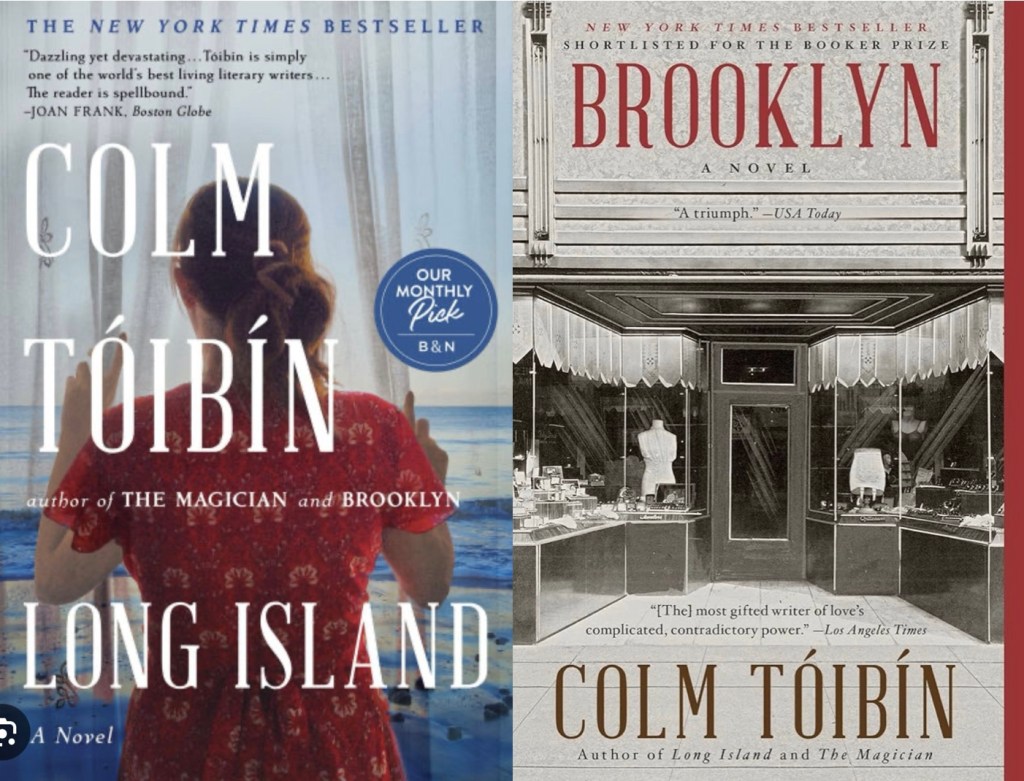
The world was first introduced to Eilis Lacey in Colm Toibin’s novel, Brooklyn. Eilis was a young woman living in Ireland during the 1950’s who, due to the lack of prospects for her future there, was urged to emigrate to Brooklyn. There she met Tony Fiorello, a young Italian native, and they fell in love. After finding home and comfort in a new place that had seemed so bleak and tragic, Eilis grew to love Brooklyn. That is, until the news of her sister’s passing came to her from across the sea. She returned home to Enniscorthy, sparked a new connection with a young man from home, and was unsure of what her future held. Ultimately, she decided to travel back to Brooklyn and to Tony, understanding that they were her new true home and that was the future she wanted. 

Fifteen years after that novel’s publication and twenty years after its events: enter Long Island, the sequel to Brooklyn. If you are a reader like me, and massively enjoyed Brooklyn, then I am sure we had a very similar reaction when reading this line on one of the opening pages of Long Island: 

“Indeed, he came back regularly when he knew that the woman of the house would be there and I would not. And his plumbing is so good that she is to have a baby in August.” 

How could so much have gone wrong? After meeting at a dance, going to the movies, a trip to Coney Island and much talk of raising children to be Dodgers fans (maybe the Brooklyn Dodgers no longer existing in the present could’ve contributed a bit to the negative turn), Eilis had wholly given up her life in Ireland to have a future with the man she loved and the place he had taught her to love. And then 20 years later all that disappears, and he cheats? 

The question remains: can we enjoy a novel whose events are categorically unenjoyable? Well, Toibin’s prose is always lovely. In both setting and character descriptions, his language is striking and seems to latch right on to you. He writes, “All of us have a landscape of the soul, places whose contours and resonances are etched into us and haunt us.” And when speaking of Eilis’ old connection from home, “It would be hard to explain to her how lonely he felt when he came into these rooms after closing time and how that feeling became more intense if he woke in the night or in the morning. He had not felt like this before the possibility of being with her arose.” 

The character Toibin has created in Eilis contains elements of all the women I know and love. He writes so convincingly and generously that there are parts of the story where the reader forgets the unfortunate opening and those trivial details looming over Eilis’ life, as she sometimes seems to as well, and we can be completely present with her. In each novel, Toibin’s descriptions of Ireland, both the land itself and the community held within, makes it feel to the reader as a second home, a place within an arm’s reach that we see and feel. 

I do not regret this novel. Its events make me angry and cautious towards the men in my life, but it is a beautiful piece of work regardless. When an author’s voice and creativity can shine through the most bitter stories, I consider them a lovely talent, and more than worthy of their place on my bookshelf.

Virginia and Vita: Star-Crossed Lovers in Literature


By Kay Mancino

Have you ever read a book by Virginia Woolf? Your professor may have handed you a copy of The Waves and asked you to write a five-page paper. Maybe you stumbled across Mrs. Dalloway in your hometown library and decided to pick it up. Perhaps you watched the film Orlando because you loved Tilda Swinton and realized it is based on a novel written nearly a century ago. No matter how you discovered Woolf’s writing, you can’t ignore the distinct imagery or subtle hints at underlying motifs: grief, loss, heartbreak, gender, and love.  

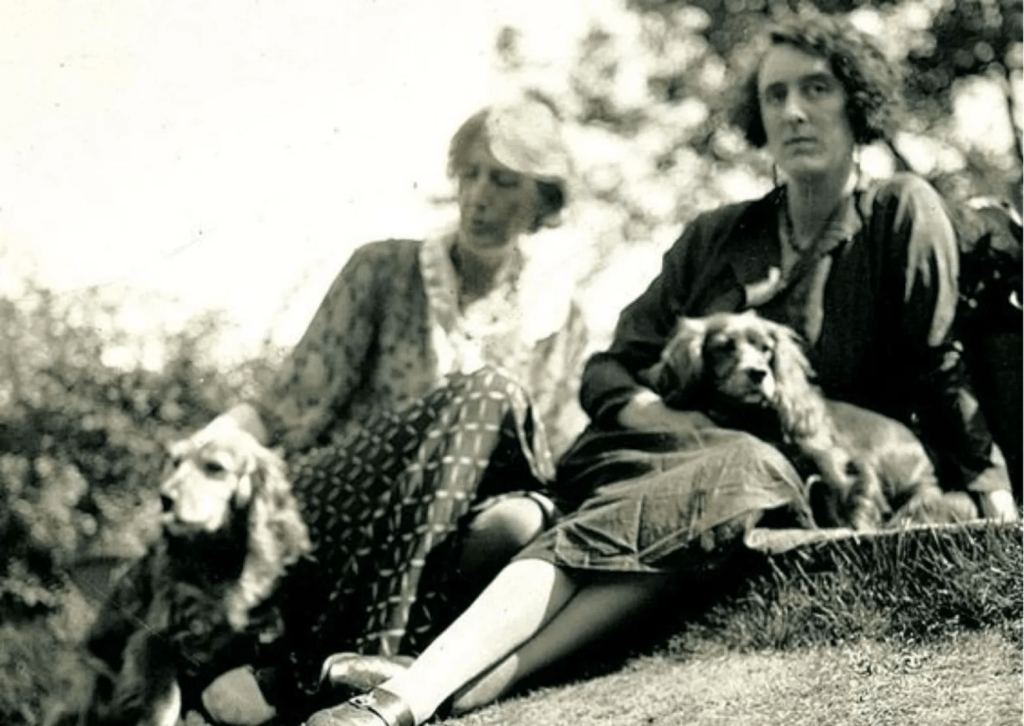
Born in 1892, Woolf explored the depths of feelings that were not often written about by female authors. For example, Orlando, published in 1928, featured a main character who switched genders from male to female. Woolf details the struggle that Orlando faced upon living as a newfound woman; unless she was married, she would lose her estate. The novel strikingly shows the power imbalance between men and women through prose which resonates with audiences of all ages and time periods. What most people don’t know is that Orlando is based on a real story and woman: Vita Sackville-West, Woolf’s long-time lover.  

Sackville-West, another novelist, lost her childhood estate in Kent due to her gender. Because she was a woman and the estate must be inherited by a man, she could not inherit the Knole house. Woolf wrote Orlando in order to provide Sackville-West an alternate ending, as Orlando ends up inheriting her own estate at the crux of the novel. Despite both Woolf and Sackville-West marrying men, their relationships were open. The two women met at a costume party in 1922 and remained lovers for over a decade, exchanging letters back and forth. Sackville-West’s son, Nigel Nicholson, addressed Orlando as the “longest” love letter of all time.  

Upon the publication of Orlando, Sackville-West wrote to Woolf, “The lesbians are rising throughout the States/ All because of you.” Woolf and Sackville-West’s letters were gathered and published within the collection, Love Letters, in 2021. Alison Bechdel, the author of Fun Home and creator of the “Bechdel Test,” wrote a forward for the collection. Despite the deaths of both women— Woolf from drowning and Sackville-West from cancer— their love has lasted throughout the century through the use of language and words. Woolf’s novels garnered inspiration for queer women, her icon becoming a staple for the community. The exploration of gender and identity throughout Orlando was a direct reference to Sackville-West and her challenge of societal roles.  

If you have ever read a novel by Virginia Woolf, you might not have expected to relate to her words and images so wholeheartedly. But at the end of the day, despite the passing of time, Woolf was a woman in love, with Vita, with literature, and with the mystery of what emotions can bring to life through the use of words.