Buy That Plane Ticket

By Pamela Trevisan

Human beings are creatures of habit; we are comfortable with the familiar. Going to the same grocery store, having your friends/family close, and knowing where to pick up your medication makes us feel safe. This creates a web of what is known and what can be attained, often easily. We grow into these shells of comfort and make a home there. Our subconscious falls into a complacency bias through this comfort, welcoming in the information that can relax us rather than seeking out information that can change how we think. Change is how we transform, by leaving our regular routine, the mind is forced to expand and make sense of new boundaries.

 If you write in the same place, you will often write what you know and your writer’s voice will swim in the same pool of ideas, but traveling to a distant place takes you to a whole new sphere of experience. All the grocery stores are foreign and if you travel alone, your family and friends aren’t quickly available to help. Left to your own devices in a strange, new place, you’re forced to discover your own resourcefulness and yet your writerly voice is still with you and often the change in environment can make you hear it more clearly.

 Traveling has aided my own writing; each time I go somewhere new, I learn more about myself and the world. This past summer, I went to Norway and witnessed a completely different movement of life. The guys wore denim shorts and  sunglasses meant for professional skiers, although they might have been ( there were many athletes—or at least people with athletic builds—on the street). Mountains and fjords surrounded me and that unlocked a new setting that I could write from, a change of my usual scenery like adding another layer to the senses. Thrown into this different culture I was bound to follow in the current of a Norwegian society, while still being tuned into how I operate.

As the green capital of Europe, Norway is a leader in the practices of climate sustainability. Their trash gets recycled into heat and manure for crops, 99% of the cars are electric, and most buildings are carbon neutral. In America, we are not as far in thought and practice with how to preserve our environment.  Through the conditioning of my own culture and upbringing, my formed perceptions receive the friction to the change that gets observed. A new truth gets presented that brings up the questioning of what really is the truth. That’s the beauty of travel, expanding the mind and breaching at the tip of a boundary you never once thought to walk up to.

 Writing appears as an anchor when I travel, something familiar that holds who I am in a stable place, something I can return to whenever. We get to see how small we are in the grand scheme of things, and how there are so many moving parts that orchestrate this existence. Writing from place opens up a new terrain that brings the reader in, through an immersive experience. It’s the visual detail, the context, and what the “I” is experiencing when they step out on the street. More than the flowers that grow from the trees or what the “I” is wearing, writing in a new place brings the reader to new emotions, feeling with the “I” with all their anxiety or praise for the world.

Color Me Read

By Agota Petrauskas

Sylvia Plath, who died by suicide at the age of thirty, may be known for her confessional and somber poetry, but for her short-lived life, she was captivated by the color red. Plath brought out the red in her at most during her complicated seven-year relationship with Ted Hughes. Plath had a dangerous side to her, one that Hughes could not control. And so she felt the most powerful when wearing her red lipstick.

More than 30 years later after Plath’s suicide, Hughes published the collection Birthday Letters exploring her suicide and their marriage. During their marriage, Hughes had an affair with another woman. After Hughes refused to end his affair, Plath attempted to take her life several times throughout the tragic divorce. The last and most significant poem in the collection, “Red,” uses color symbolism to describe their chaotic and dismal relationship and Plath falling into psychosis. He wrote, “Red was your color,” and described her lips as “drip deep crimson.” The poem is filled with allusions to Plath and her color so we can imagine how their room must have looked from his evocative images. Their room reflected their violent relationship, “Our room was red. A judgment chamber,” Hughes writes. A room that was meant to be the most intimate and adored, was made to be threatening. “The carpet of blood / Patterned with darkenings, congealments. / The curtains – ruby corduroy blood, / Sheer blood falls from ceiling to floor. / The cushions the same.” There was no escaping this color for him and Plath wanted that to be known. However, Plath also had a blue side to her and Hughes preferred it, she was quieter and it was easier for him to control her. The last line in Hughes’s poem, “Red,” reads, “The jewel you lost was blue.” But her “red” side allowed her to be free from her “blue” side and the ties that came with it: her relationship with Hughes and her suppression.

The color red became a complex color for her. She used it to feel alive and confident, yet it was what most symbolized her psychosis and depression. Plath had put a red rug under her writing desk after Hughes left her and always wanted her bedroom painted red. Plath also always wore red lipstick that was creamy and bold. Her most iconic lipstick shade was Revlon’s “Cherries in the Snow.” It’s no wonder Plath stuck with one of the boldest and most empowering colors during her time of suffering and heartbreak. Plath’s poem “Tulips” deals with her experience with depression, which readers can see in the lines “The tulips are too red in the first place, they hurt me,” and “Their redness talks to my wound, it corresponds.” Even so, red can symbolize life as well, as blood carries oxygen to body parts. The color satisfies almost all of the emblematic elements of poetry. Some of her most influential words were in the last stanza of her poem “Lazy Lazarus,” which reads, “Out of the ash / I rise with my red hair / And I eat men like air.” In “The Unabridged Journals of Sylvia Plath,” Plath refers to the color red over one hundred times (What Sylvia Plath Loved | Academy of American Poets.)

Writers turn their space into a creative chamber that resonates with their words. It all comes down to creating an atmosphere for your creative work. Sylvia Plath’s favorite color was red and it became her whole personality. Her affection for the color was one of the best things that could happen for her writing, at least. A simple color influenced her writing to the point that it appears hundreds of times throughout her published work and is what represents her and her poetry. It helped her visually describe and symbolize her relationships, state of mind, body, and much more with this color. It was her source of inspiration, it was and still is, her color.

Do Queer Characters Always Have to Suffer?

By Savannah Meyer

When the new movie Bros, was touted as the “first gay rom-com from a major studio” it should have been seen, in the eyes of many, as a triumph for LGBTQ+ representation in media. Not quite. Bros was deemed a box office failure in the weeks following its premiere and the star of the movie, Billy Eichner, was quick to blame the movie’s lack of success on straight audiences not showing up to see the film. Some critics attempted to debunk this claim, arguing that while “homophobia might have contributed to the damp performance at the box office… that doesn’t tell the whole story. After all, audiences showed up for Moonlight, and Brokeback Mountain…” (Placido, 2022). This critic points out a vital detail: not all LGBTQ+ films have been destined to be commercial failures. However, the films which end up with the most mainstream success are often movies curated to be digestible for straight audiences.

It’s important to consider that during the promotion for Brokeback Mountain the actors specifically shut down suggestions that the film was a “gay cowboy” movie, making sure to clarify that it was simply “a story about love”. Additionally, some sneaky promotional material for the film actually depicted the lead actors in straight relationships, a tactic which some are now claiming was “straight baiting”. Regardless, Brokeback Mountain had an audience because it was never explicitly promoted as a “queer movie”. The movie was quite literally made by and for straight audiences. It was a movie with straight cis male leads, directed by a straight cis man, based upon a short story written by a straight cis woman.

Meanwhile, the creators of Bros have dared to market their film as an explicitly gay movie. Unfortunately, they have also attempted to make the movie something for everyone. Bros may have an openly LGBTQ+ principal cast, but was it made for “the gays”? Not solely. Because any film attempting to reach mainstream success must cater to straight audiences. In doing this, both straight and gay audiences alike are alienated.

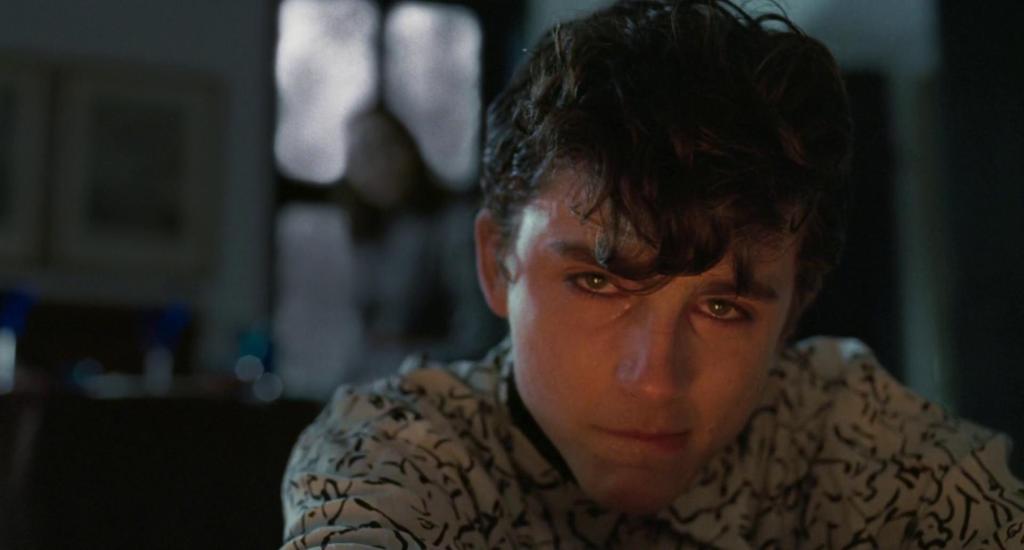
 Furthermore, audiences seem to generally prefer their doses of queer media to be peppered with tragedy and devastation. Bros simply may have been too happy-go-lucky of a movie to catch an audience’s interest. In many cases, successful queer stories end in the death of queer characters, as is the case with Brokeback Mountain and many other classic LGBTQ+ films. Though certain contemporary examples involve less queer death, they still often involve the suffering of queer characters. This can be seen in 2017’s Call Me By Your Name, a film which famously ends with an excruciating three and a half minute static shot of the main character crying over his lost love, even as the credits roll. Straight audiences eat this type of media up.

This same concept goes for all types of queer media. Seeing how Brokeback Mountain and Call Me By Your Name were initially penned as a short story and a full length novel respectively, it is safe to say that the world of literature must also market itself toward the straight gaze. Notably, both pieces of aforementioned literature were written by straight authors.

It is important that we examine why straight authors (and screenwriters) have the desire to tell stories that are not their own. And why, when telling these stories, do straight writers force queer characters to suffer? Is it for the entertainment of the straight reader or viewer? Being queer is often transformed into a novelty of sorts in most media, and the function of queer characters is to perform queerness in a way that satisfies straight audience’s expectations. Queer joy is often times not one of those expectations.

Creating Together

By Aaron Noriega

My name is Aaron Noriega, I’m a creative writing major an artist, a performer, and a musician. One of the reasons why I chose to go to SUNY Purchase was because of the many ways for students to express themselves. There are classes like Experimental Workshop, senior art projects, and student-run clubs, however, I found that our campus doesn’t necessarily reflect the creativity one would expect from an art school. Though the students at Purchase are constantly making brilliant art, the campus’s walls and grounds are often bare. I found myself wondering how many students felt the same, whether they, too, looked at our campus and wondered “What can I do to share my work and find others who want to do the same?”

I found myself incredibly lucky to be rooming with a bunch of film majors this semester. Though I’m not estranged from having artistic friends, I was used to creative writers and visual artists. I had never explored the art of filmmaking, except for perhaps a screenwriting course during my freshman year. The new environment was refreshing and a real beacon of growth for myself creatively. My roommates and I weren’t just bouncing ideas off each other, we were beginning to create whole storyboards and plans for our creative future. I want this to be something bigger than just three art students in a dorm at three in the morning, though.  

What I love about The Writer’s Club is the deep sense of community. I found that within it, even if it’s to work in solitude there is a space created to put your soul into something. The stories I was writing, the music, and the art I was making connections in ways I would have never thought possible.

Wouldn’t it be wonderful to just bring all the brilliant brains on campus into one room to just create something? What could we do if we created a space to create together, to step out of our comfort zones? The idea of a club comes to mind, all creative minds are welcome. Students could gather once or twice a month whether it’s to help one another with creative work or to give an outside perspective. Or they could come together with a theme, and try to collaborate and create a piece together, I would love to see works from all artists and the mixing of all mediums The club could be called Mediums Move. Each month could be dedicated to a specific theme, the art-if possible- combined into one big project by the end of the year. There could be ways to find places to share the art. Creating social media pages, and getting as many students involved as possible. There is nothing more beautiful than creative minds working together to make art.

What Does Fanfiction Mean For The Future Of Writing?

By Cephie Howell

It is somewhat well-known that the first modern record of ‘fanfiction’ can be traced back to the 1970’s, with the very active Star Trek fan community. This primitive form of fanfiction was published in fan-run magazines, quickly gaining so much popularity that the show’s creators were eventually compelled to acknowledge it. Now, fanfiction is a widely recognized part of fan culture, with even the most casual fans of shows, books, music, and movies participating in either the consumption or production of fanfiction.

            It is difficult to find exact statistics that detail the real number of people who consume fanfiction on a daily basis, but by examining specific websites and organizations we can see how widespread fanfiction really is. FanFiction.net, a very popular fanfiction website, has over 14 million new stories published each year, according to public statistics. Traffic metadata also shows that in December of 2021, the other popular website Archive of Our Own, had 1.7 billion page-views, a number that had been steadily rising throughout that year.

            With so much content, how does a fan find the stories that most interest them? The primary way to filter through these archives goes as follows; the reader goes on the website and selects which fandom, the book/franchise they want to read from, then by characters, and they can narrow it down even further by the scenario they want to imagine. For example, you want to read about Superman and Batman meeting in a coffee shop? There’s a tag for that. How about a raunchy dystopian buddy-cop adventure starring the cast of Hamlet? There are several tags for that. Want to see Jesus and Lucifer suddenly get the hots for each other? There’s definitely a tag for that. The system of tagging works with pertinent details about the plot, settling, characters, and the interactions that will ensue means that a reader can find exactly what it is they want to read. It completely cancels out the worst part about finding a book you enjoy— sifting through all of the books, and plots, and mediocre characters that don’t interest you. This likely reflects what the future of the creative market looks like, a completely customizable and personalized experience, something that will go a long way to aid in the exposure of all sorts of new writers and novels.

            But why is it that people write these strange niche stories? They aren’t getting paid for it, and most might even think them strange, so what compels a person to write a fanfiction? For many it boils down to a genuine passion for writing. Fanfiction can be a fun and engaging way for people to both expand on characters and worlds that they adore, while also sharpening their writing skills. One of the hardest parts of writing is creating a world and characters that suit that world, but writing fanfiction completely sidesteps those issues by using previously existing cannons as a writing prompt for new adventures. Another aspect of fanfiction that has historically brought in many new readers is that fanfiction has been a way for people to tell queer stories that the mainstream media have always avoided. Fanfiction and queerness have gone hand in hand in more ways than just sharing stories about queer relationships, it has also been a way to foster new and safe queer communities. It isn’t uncommon for a casual purveyor of fanfiction to have made friends in the comments of a favorite fic! What might begin as sharing common interests in a specific ship can bud and grow into large groups of interconnected individuals all creating a safe space for the creation of art, and that is a very beautiful thing.

            For many a love of fanfiction stems from a want to expand on worlds and ideas that have captivated you. Perhaps the ending of a series was disappointing, fanfiction can be a great outlet to practice one’s writing while also learning how to critique the media we absorb. It has historically been a way for queer individuals to find themselves in the characters that inspire them, and to use their voices and imaginations to shape media in a way that allows for a representation that isn’t often given by the major corporations creating the stories we consume. Fanfiction; whether a hobby or escape, a means of growth or of comfort, has something for everyone. As our culture continues to shift and change with the times, it will be interesting to see where this fanfiction phenomenon goes in the future.

Make My Mood

By Juliana Warta

While it may seem tedious to create a mood board for a project that may never have a visual component, it still does come in pretty handy, or at least it has for me. Having a visual reference or simply a collection of ideas and inspirations for a story can make the writing process both easier and more vivid.

So how do you create a mood board? What apps are helpful? What could you search for? A great place to start is Pinterest. Pinterest has many aesthetics and pictures that you can look through, and it’s very easy to search without having to be too specific.

Pick a color/ tone. You want to think of the color or tone you want your story to have. If you’re writing a more mystical/fantastical story, you may want to have a warm color like yellow or a sage green. If it’s horror or a much darker story you’re writing, you may want to consider a dark red or brown or a moss green. Thinking in terms of color might help you establish mood in your story. Searches that may help include: “fantasy aesthetic,” “dark aesthetic,” or “night/day aesthetic.” Most of the time you can find exactly what you’re looking for just by adding “aesthetic” to the end of it.

Think of your setting. If this takes place in medieval times, a castle might appear in some of the pictures or a village with simple cottages. However, if this takes place in a modern period, you may want to think about where your characters hang out. Perhaps a local coffee shop or movie theater? This will not only give you an idea of where the story takes place, but also gives some insight into your characters. Think about why they like going here so much. Is this coffee shop a quiet place for them to do work? Do they meet their friends here? Do they have a crush on the barista and come to say hi every day? Searches may include: “medieval aesthetic,” “movie/coffee shop/ library aesthetic.” Sometimes adding “date” before aesthetic gets you more pictures with people in them.

Quotes about the message/theme: You may want to think about some quotes that relate to your story, whether stemming from theme/motif or a motto they might live by. These quotes may never appear in the story itself, but are important to have for background. When creating your character, it may help to create a moral code for them or people that they look up to. You can also search for quotes from your favorite books or tv shows, one that you think inspires or relates to what you’re currently working on. Searches for this may include: “quotes about never giving up,” ( sometimes quotes may come up in aesthetics.)

Aesthetics for your characters (physical appearance): Now it’s time to start crafting your characters within the story. Having references to what you want them to look like can really help with description. If your character’s bright red hair is important to the story, or the first thing people notice about them, it may be helpful to have some faceless pictures of red heads. You should also think about eye color and skin color. Do they have bright blue eyes or a more subtle dark brown eye color? Also think about what this may say about your character; are they aware of their most captivating feature? Do they like to show it off or keep it to themselves? Do they get complimented on it a lot and how does that make them feel? Searches may include: “(color) eyes aesthetic,” or “(hair color) hair aesthetic.” Also try searching up specific features on someone’s face, maybe “freckles,” or “pale skin.”

The way a character dresses can say a lot about their personality. If they are quiet and shy, they might wear more monotone and baggy clothes to stand out less. But if they are loud and outgoing, they may wear more preppy skirts or happy colors. Some questions to ask yourself while creating this mood board might be: what is my character’s most appealing/loud feature? What would my character wear on a daily basis? What might my character wear on a first date or fancy event? How a character dresses in a story set in medieval times might inform you about their job or social status. If you’re setting up two characters in conflict, you might want to differentiate how they dress.  

Having mood boards for your character’s hobbies or favorite things can really help create their personality and give the reader a good idea of what they’re passionate about. Even if it’s not a central idea in the story, it still makes your character feel like a real person and makes them more relatable. Think about what they like to do in their free time, such as reading or art. You can delve deeper by asking what type of books they like to read or what type of art they enjoy (painting, drawing Etc.) and where they like to go to do these things? Do they have friends that share these interests with them?

By the time you’re finished you should have more than enough material to look back on for inspiration. And who knows what else you might discover along the way!

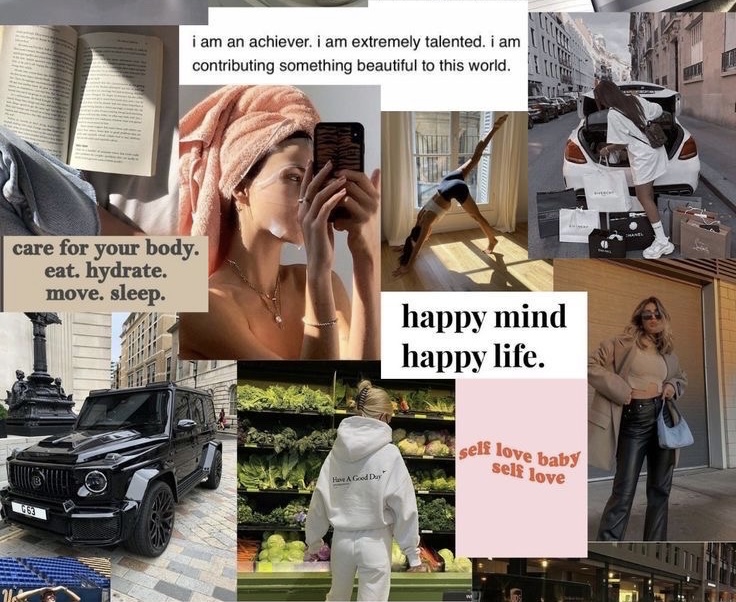
(An example of a finished product)

Can Artificial Intelligence Replace Writers?

By Sebastian Rios-Rodriguez

Artificial intelligence has been integrated into society with tools such as Alexa, and Siri, a concept that not too long ago only existed in science fiction. As a writer of science fiction, I have read many stories concerning A.I. Today’s technology hasn’t advanced enough for them to overthrow us, but it has gotten to the point where A.I can generate creative works. Now it seems artificial intelligence can even write stories, and make art as well. A.I programs such as Dall.E 2, an A.I art generator, and Writecream, a fiction A.I generator, has seen a rise in popularity, among other similar programs. Social media has begun to make use of these A.I programs to create pieces of artwork, or create stories or screenplays, one such example being a Batman screenplay. YouTubers like, Jazza,  a popular artist on the platform boasting 6.12 million subscribers, has compared the creative work of A.I work, and humans. Art generated from A.I for sure have created some quality pieces and are even posing a threat to artists. After seeing videos on the topic, I decided to investigate whether or not it really could replace writers.

Sassbook.com is an A.I program that is both free and has diverse genres to choose from, so I started there. The way A.I writing works is by using a set of programming that can learn and also pull information and data from the internet. This information is based on the keywords and phrases you input into the program.  The A.I can effectively learn to craft a story using all the information it gathers. You can pick what genre you want when using the A.I, and input a phrase and keywords. There is a recommended 15-30 word limit on the prompt you put in. By doing this the A.I will craft a story using the words and phrases you input. I followed this process by inputting, “A man in space, fighting an alien army, but he finds out they are the good guys.” It was a random line I came up with to generate the story. The stories are often short, but you can keep clicking the button that generates more writing, each click adds to the story. The A.I can keep a coherent story after I clicked a couple of times. It built upon the original prompt and continued to write more. I had the option to choose a genre but decided to keep it neutral in order to, see what the A.I would come up with on its own. It would seem that A.I really could replace fiction writers. Or could it?

A.I has its limits; The story might be coherent, and the syntax can sound unnatural or jumbled, thereby confounding meaning. The A.I needs a bit of help sometimes requiring you to go in and fix sentences or include more clarification for a certain element. This could include things like the A.I confusing a description of a place or action for a description of a person. Another example, the A.I, would write out actions, including much-unneeded detail. It gave too much where not much was needed. Creating longer pieces would be difficult for the A.I as it would run into problems with too much description, as well as having clunky sentences. It can sustain a narrative, but a confusing one when you can’t tell who is talking. The dialogue is also not the greatest, sounding generic and lifeless at times.

The A.I create original work, paired with a writer it is an immensely powerful tool to test out ideas, and even get new ones. If a Writer gets writer’s block, this is an excellent way to test out ideas and experiment with storytelling. Writer’s block is something many writers, both experienced and inexperienced face. With programs like these on the rise, we might see a surge of writers utilizing the A.I. Artificial intelligence should be looked at as a tool, and not as competition for writers.

Visuals from Sassbook.com:

Are You Really Getting What You’re Paying For? A Glance at Unused and Unknown Student Resources

By Michael Abramson

Let’s face it: college isn’t cheap. Many of us are spending thousands of dollars out of pocket and taking on even more in loans in order to be here. Most students would say that it’s worth the cost—and I agree! The important thing is to make sure that every dollar counts. College is a unique experience that is just as much about forming connections with students and professors as it is about education. As of Fall 2022, SUNY Purchase College has an enrollment of over three-thousand students, all of whom pay the MSAF and have equal access to a wealth of resources available on campus that so few know about.

Never heard of the MSAF? The acronym stands for: Mandatory Student Activities Fee. It’s something that every single student pays as part of their tuition regardless of part-time, full-time, commuter, or resident status. This money is allocated for student clubs and events like Culture Shock (a spring festival with famous performers and fair rides), STOOD parties put on by clubs with live music, and more.

But what about the resources we pay for that aren’t advertised?

For example, the New Media school has a laser cutter and 3D printer (CMFT 0082) right next door to a fully functional woodshop (CMFT 0080) in the basement of CMFT. I used the laser cutter once to create wooden tokens for a story I wrote in a creative writing course on building alternate worlds. s long as you bring your own materials during lab hours, someone will teach you how to use the machines. Hours for open hours to use the laser cutter and 3D printer are not currently posted, but make sure to keep an eye out! There is also a screening room (CMFT 0065) in the CMFT building with built in seating and projectors that can be rented out by students for viewing parties, or even just hooking up a gaming console and playing with friends. Any student can book the screening rooms—or any other available room—through RoomBook on the Purchase Webpage.

On top of access to many different types of equipment in CMFT, the campus has a whole department in the basement of the Social Sciences building dedicated to loaning technical equipment out to students for classes, group projects, or personal endeavors. Campus Technology Services, or CTS, has tons of equipment such as: microphones, speakers, lighting equipment, laptops, tablets, headphones, and more. On average, rentals last about one to two weeks, but can be extended for the full semester upon request. It won’t always be approved, but it never hurts to ask!

Purchase also offers access to free yoga classes at the Wellness Center in Fort Awesome. With classes taught every day, different instructors offer different courses. Ranging from Pilates with Paul to Yin Yoga with Jane, the Wellness Center offers students a safe place to relax and escape from the stress of assignments. Purchase also offers free lectures from visiting artists, writers, concerts, and more!

There are also places where students can get things! Everyone loves things and The Freestore gives students a place to get just that. The Freestore is an on-campus thrift store located on the second level of D-Hall that is completely free to students. All goods are donated from the student-body and the surrounding community. On a good day, you can find big brand bags or cooking appliances, and on the bad ones, you can find some silly props for a short film you’re shooting in the tunnels beneath the plaza. The FreeNew is a similar concept. All around the campus are sheds containing things left behind by students who either moved or graduated: old fans, storage cubes, even ice-cube trays, etc. They open at the end of each semester so students can get rid of things they don’t need; one person’s trash is another person’s treasure.

Finally, The Food Pantry, which is located on the bottom floor of the library, where students can go and pick out food that has been donated. Canned goods and non-perishables are at the tips of our fingers and any student is welcome to take some as long as they have a valid student ID. Everything is completely anonymous and confidential so everyone can have equal access to food on campus. These are only some of the resources available that I’ve managed to discover. Reach out to professors, send emails to directors, take advantage of the resources you are paying for and make your education work for you!


Throw Me a Line; A discourse on lineation in visual art and poetry

By Natalie Çelebi

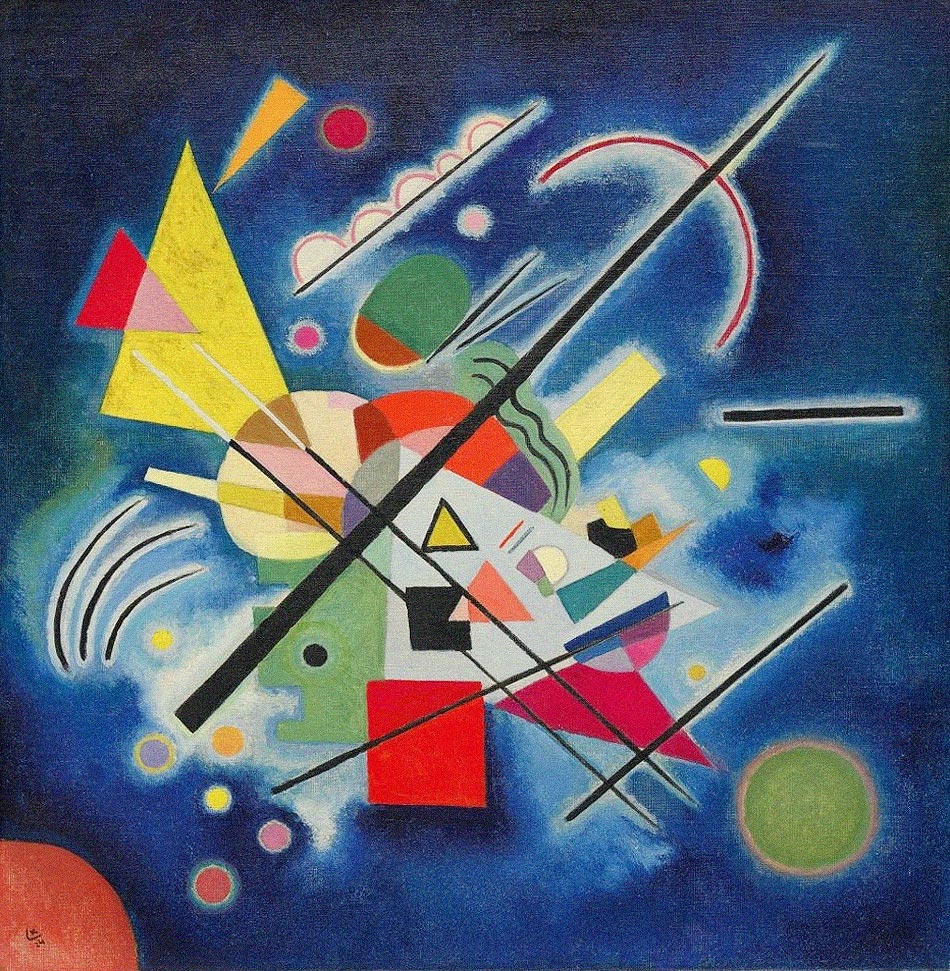
Photo : Blue Painting by Wassily Kandinsky​

To the poet, the line straddles a nexus of beginnings and ends– at once a breath drawn and a final exhale. Likewise, to the visual artist, the line deftly asserts and differentiates. Lately, I’ve wondered about the line, its sojourn into physical and conceptual space. There’s no denying–it gets around. But what does it do? What are its means as a constructive basis across these two disciplines?

Every poem leaves the trace of an invisible mover; under whose careful craft do these black strokes soar across the page, under whose charge do these ants march left to right?

Though lines are more often obscured in visual art, they serve as a similar constructive basis, leaving the scent of a not dissimilar mover. The intuitive drawing of the line is more divisive than we might initially think– an assertion, literally, against white space, an observation of illustration as opposed to blankness. This same tension, procured by the line, is readily observable in poetry. The white space of the page and the black text of the line exist simultaneously– the voice of the poem and the silence of the page are at once actualized. It is then the reader who traverses these silences and their acquittals.

The simultaneous assertion of these oppositions, this paradox, is in part the life of the poem, and the primary source of its constructive tensions. That a human scrawling can exist amongst an invisible order– or at the very least, a voice out of what might otherwise be deemed silence– asserts a tension around which art finds itself uncompromisingly gathered.

It is worth observing also that in the simplest visual terms, the line in poetry is a horizontal line. In his famous treatise Point and Line to Plane, Wassily Kandisnky writes that in the human imagination the horizontal line “corresponds to the line or plane upon which the human being stands or moves.” This perhaps is the most poetic basis on which to build our impressions of the poem’s structural nature and the purpose of the line; to stand, to move.

Though up from what does it stand? From what is it spurred into motion? It may suffice for now to say that poetry moves from and out of the invisible. The artist’s often indefinable inspiration, contextual mysteries within the writing, the mysterious arrival of a poem itself may all be things which signify and constitute these invisible points. Regardless, the line articulates these invisibilities and furthermore, it moves both at the joining and in the wake of their connection. It is the basis on which a poem is propelled logically and tonally, the poem’s vastness cocooned also in each line.

A line, in works of visual art, encompasses this same ethos of movement, a visible articulation of invisible points, toward which they are joined into critical parts of a whole. It is here in motion from the point to the line that Kandinsky notes, “the leap out of the static into the dynamic occurs.”

Some poets believe the line is breath; the syllabic spell of iambic pentameter was originally meant to encompass the measure of a single breath. Poets who write in projective verse–Jorie Graham, Barbara Guest, Ocean Vuong (to name a few contemporaries) – make white space an even more integral part of the line, so one measures the cosmos of the poem visually as well as linguistically, thematically, and the breath between each abstract term, each ‘line,’ becomes enveloped by this basis of survival: breath.

The lines of a painting or drawing may be more numerous than the lines of a poem, but each of them carry respectively the same necessity; each is air to their respective body. Both the poem and the drawing obscure the line, transform it, expound upon it, and when undressed, can also be brought to it, distilled in its brave and necessary insistence to move, to speak.

Temporalities should also be considered– the line as a unit of motion is also necessarily one of time. In Medieval times, before paper was easily procured, there existed a mode of recycling whereupon writing was scraped or washed off animal hides to be reused. These collective documents, called palimpsests, exemplify a unison among the disparate, containing not only the contents of a present document but traces and shades of previous writings.

It is through the destruction and transformation of the line that a painting contains and expounds upon its own past. Drawing then itself earns a kind of palimpsestic quality, past records of the line destroyed and transformed by the artist, quipped into form. It is called a pentimento in painting where earlier drafts haunt the final work and these spectral lines again reemerge.

Poetry, too, is a picture of palimpsests and pentimenti. When writing or reading a poem, there is a feeling one is impressing and being impressed upon by previous voices; who–yet again–are these invisible movers? Whether they be an engagement with the work’s previous selves, or with voices of the past at large—a work of art is always in conversation with its predecessors; an inky palimpsestic chorus, worn and feathered lines flanking each written word, each emerging shadow and shape. Between the two
disciplines lies yet another convergence; the past, and present, in all its looming candor, is on the line

An Ocean of Fear: How Subnautica uses a Thriller Author’s Technique to Create Terror

By Brandon Dennis

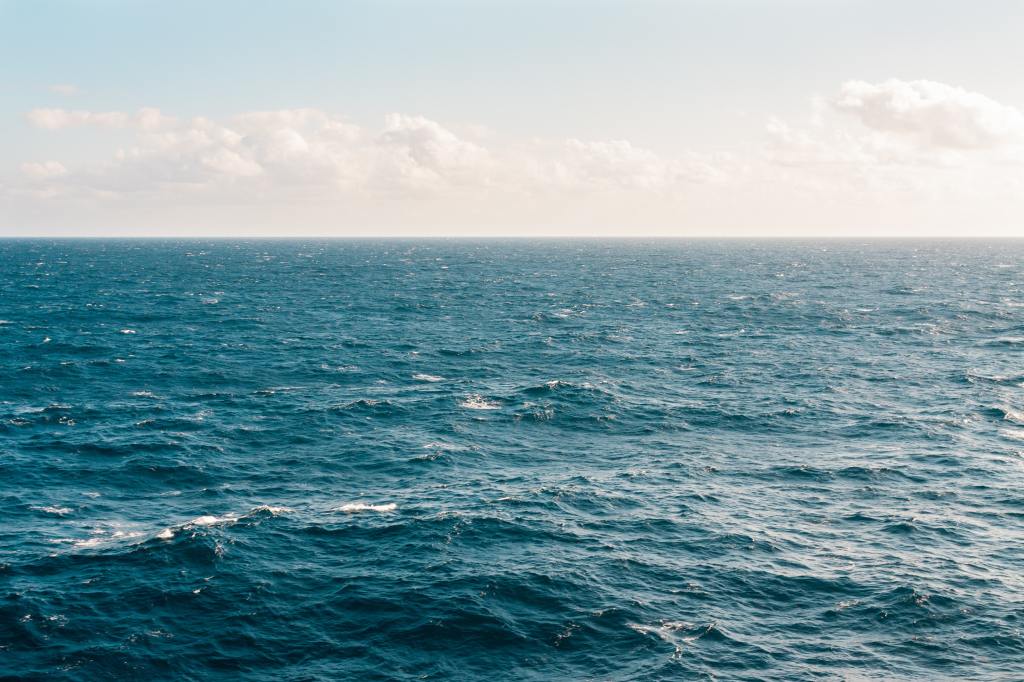
Photo by Kellie Churchman

“ Attention. Hull failure imminent. All personnel: abandon ship.” Announces a faintly staticky robotic voice, vaguely British, quiet in comparison to the steadily blaring siren over the dull base rumble of explosions. A third sound grows audible: your own ragged breath. You’re sliding down a ladder into a tiny pod of a room. You take no time to look around as you throw yourself with a grunt into a single chair attached to the wall. Before you’re even fully seated, your finger lands on the button on the armrest, causing a harness to lower over your shoulders and torso. The same voice, louder this time: “Launch in 3… 2… 1…” You brace yourself with the handles of your harness as the room rumbles. Gravity loses meaning. You peer up through the glass hatch from which your ladder descends just in time to see the brilliant flash of a detonation with a blast far louder than any previously heard. Your pod shakes from the proximity. A metal panel and a fire extinguisher are ripped from the wall as the red warning lights spin and a rapid high-pitched beeping fills the room. You have no time to react. The panel catches you squarely across the temple and everything goes black.

            This is not the start to an odd, second person sci-fi novel, nor a written account of an eighties sci-fi movie: it’s the start of Unknown World’s survival horror, Subnautica, a game in which you collect resources and explore an alien ocean to find and construct a way home.

As you reawaken and emerge through the hatch above the ladder, you find yourself standing on a “lifepod,” a single floating spec of safety in a massive ocean. There’s nothing in any direction except ocean- nothing save the hulking mass of your spaceship, the Aurora, miles away and larger than a skyscraper, half submerged in the sea.

            The plot is clear. A “fishbowl scenario,” as described by thriller author and essayist Benjamin Percy. You are on an unknown alien planet and the conflict doesn’t hide. You’re trapped. It is this lack of context that adds the “horror” to the description of this game. You are alone, and you know nothing. When addressing how much backstory to include in a story, Percy asks “How about none?” He reasons making inferences and filling in the blanks of the narrative is part of the pleasure of reading a story. The reader become a “coauthor.” As you eventually work up the courage to dive into the sea, this internal coauthor is firing on all cylinders. There could be anything beneath those waves.
            Subnautica was designed to take advantage of that terror. As the game is played, you collect materials, build gadgets and tools to help you survive. In the vicinity of your little “lifepod,” you learn to avoid sand sharks and barracuda-like stalkers. At first, they’re frightening, leaping out and ambushing you seemingly at random. But you learn. Sand sharks are only quick in bursts, stalkers can be distracted with an offering of fish.  While the ocean is far from safe, you grow in confidence as you play. Eventually, you even manage to build yourself a personal submarine, and learn of blueprints for a rocket in the captain’s quarters of the Aurora: your way home.

It’s here the game borrows from literature what Percy calls “the reversal”.” It’s a subversion of expectations as, according to Percy, “We’re vulnerable to the terror because we don’t see it coming.” It’s no coincidence that the safest biome in the game, appropriately named the “safe shallows,” is set directly next to the hyper-dangerous “crash zone,” where the Aurora looms. The promise of escape and the murky waters around the Aurora hide the lurking leviathan. At least until it attacks, ripping apart your safe submarine and nearly devouring you. That instant transition from comfortable and familiar to frightening and unknown mirrors the sentence structure of a thriller suspense novel. If the game began immediately with you, the player, swimming desperately away from the hungry jaws of a “Reaper Leviathan,” the effect would be far weaker. Those hungry jaws don’t show up until you’re comfortable in the ocean, confident in your knowledge of the world around you and hopeful from the promise of escape.

By borrowing from literature, Subnautica is careful to provide you with just enough context to construct a narrative and reverse your expectations when you start to feel safe. With literary techniques, Unknown Worlds takes Subnautica from a forgettable gaming experience and transforms it into a sucker punch of terror.